Praani ki Kahani
Praani is our note on listening better to the voice of nature, ways of amplifying them, and finding pathways to bring them into our ways of governance. At Agami, we are deeply interested in how rivers, forests, animals, and even the winds and the stones, might speak into ur deliberations on justice. This note had gone out on Dec 11, 2025.
Offering For the Week
When a Langur Walks into the Mela
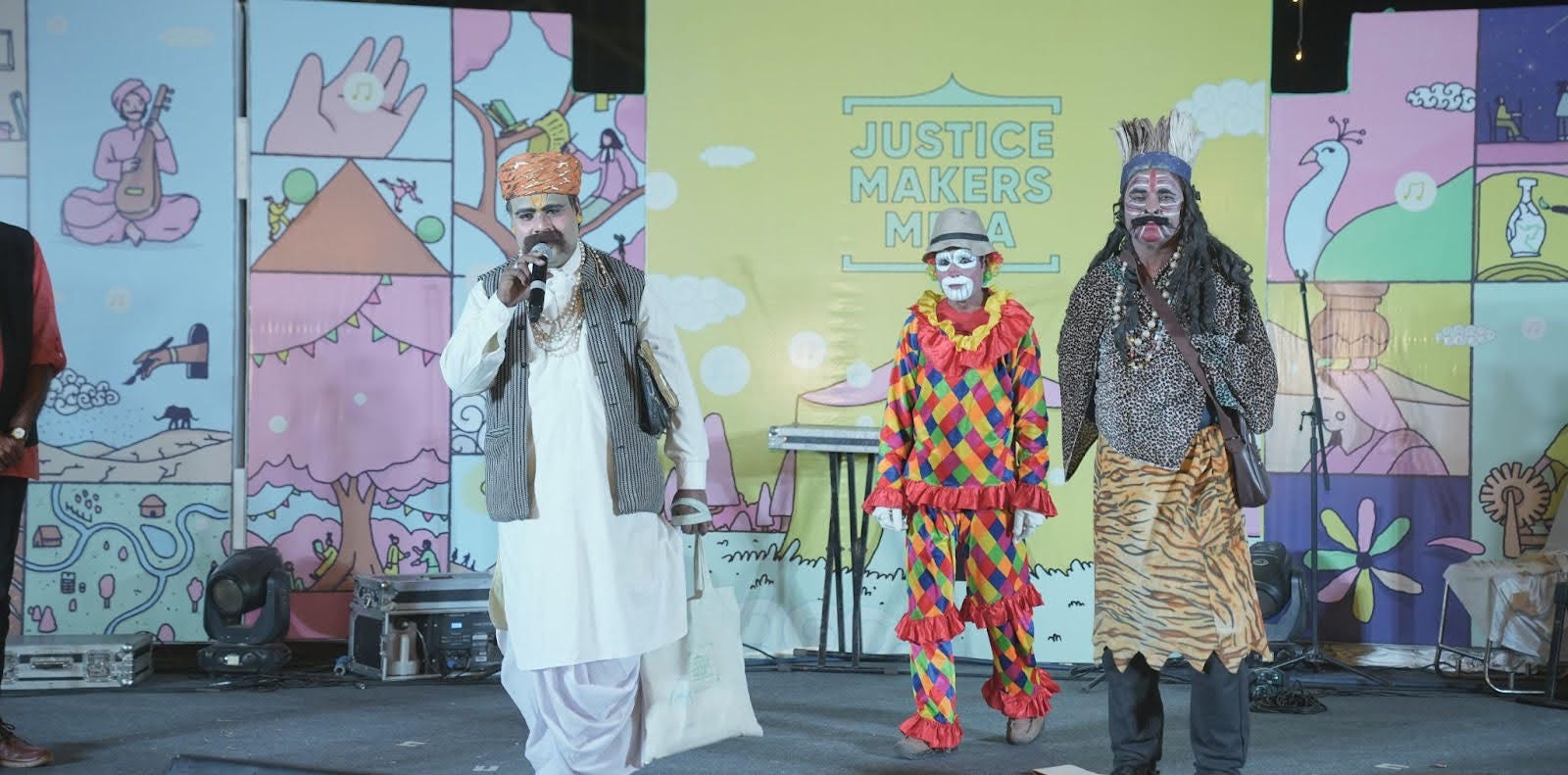
At this year’s Justicemakers Mela in Rajasthan, a Behrupiya performer walked into the crowd dressed as a langur. Others arrived in costumes that many would read as comical. People began taking photographs and selfies, and the scene itself began to raise a few questions. Why should someone have to embody a non-human for our entertainment? A ‘person’ should not embody a ‘langur’ to become a caricature for others’ entertainment.
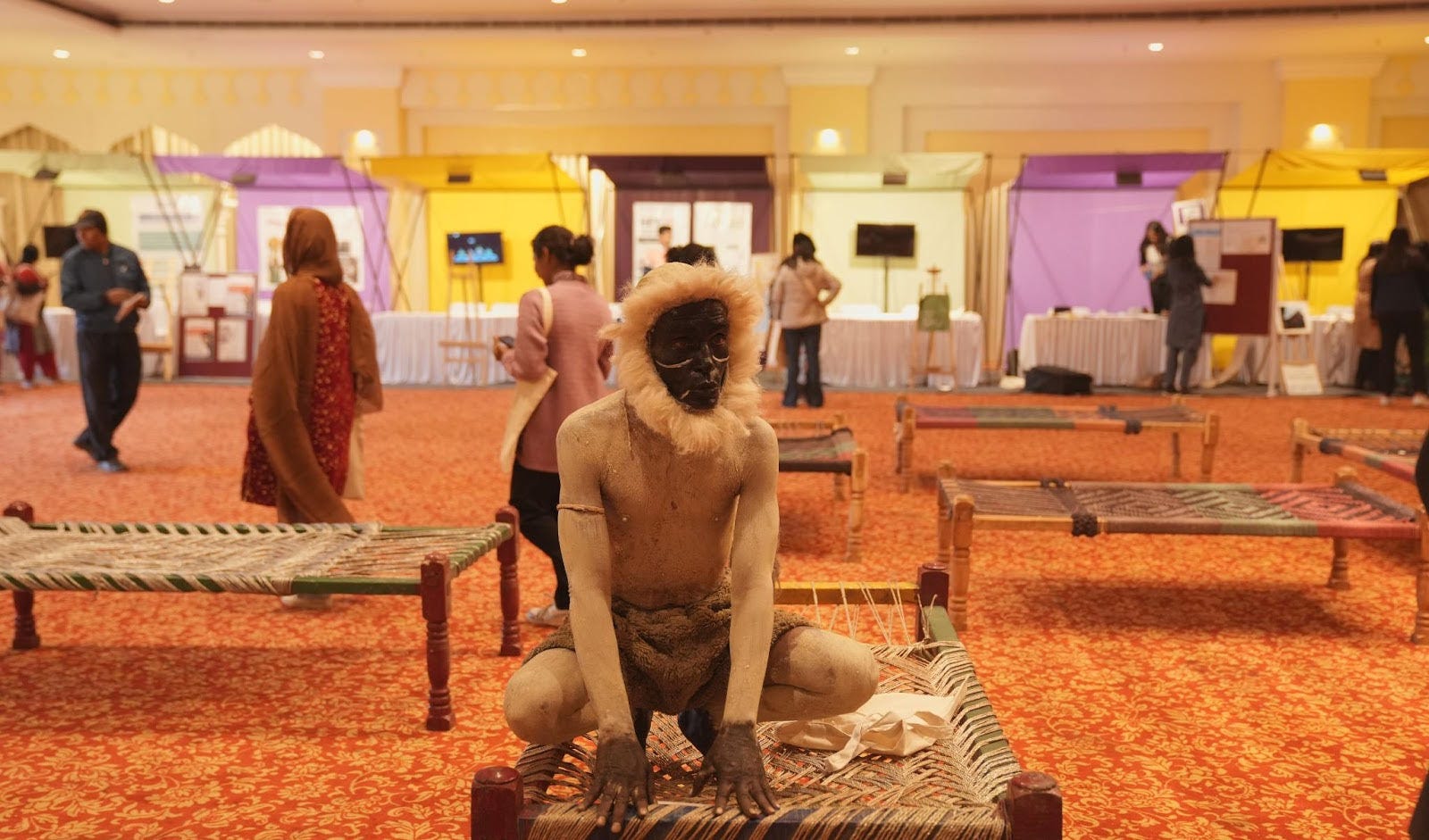
When we took this worry back to the Behrupiya group, they were hurt and also very clear. This is a craft — a sacred inheritance — they said, a practice of many generations. It is an art form that has travelled through their great-grandfathers and grandmothers, held in families that live with animals in far more kin-like ways than most of us do and our modern sensibilities may be unable to grasp. If it feels offensive, perhaps it is our value system that is out of place, not their art.
That exchange stayed with me. It made me think about our tidy room of modernity that many of us inhabit, where certain values arrive already ranked. Within that room, some forms of embodiment are welcomed and others are left outside. We rarely object to the zeitgeist of screen entertainment that surrounds us, where gore, war and the spectacular suffering of humans and more-than-human life play on repeat. Yet a person who paints their face, wears a tail and moves as a langur in front of us can suddenly trigger discomfort. The Behrupiya serenades the crowd with an invitation to inhabit another skin, another gait, another way of moving through the world. Our unease often says more about our own interiority than about their practice.
Ambedkar, Criminal Masks, and Who is Allowed in the Room
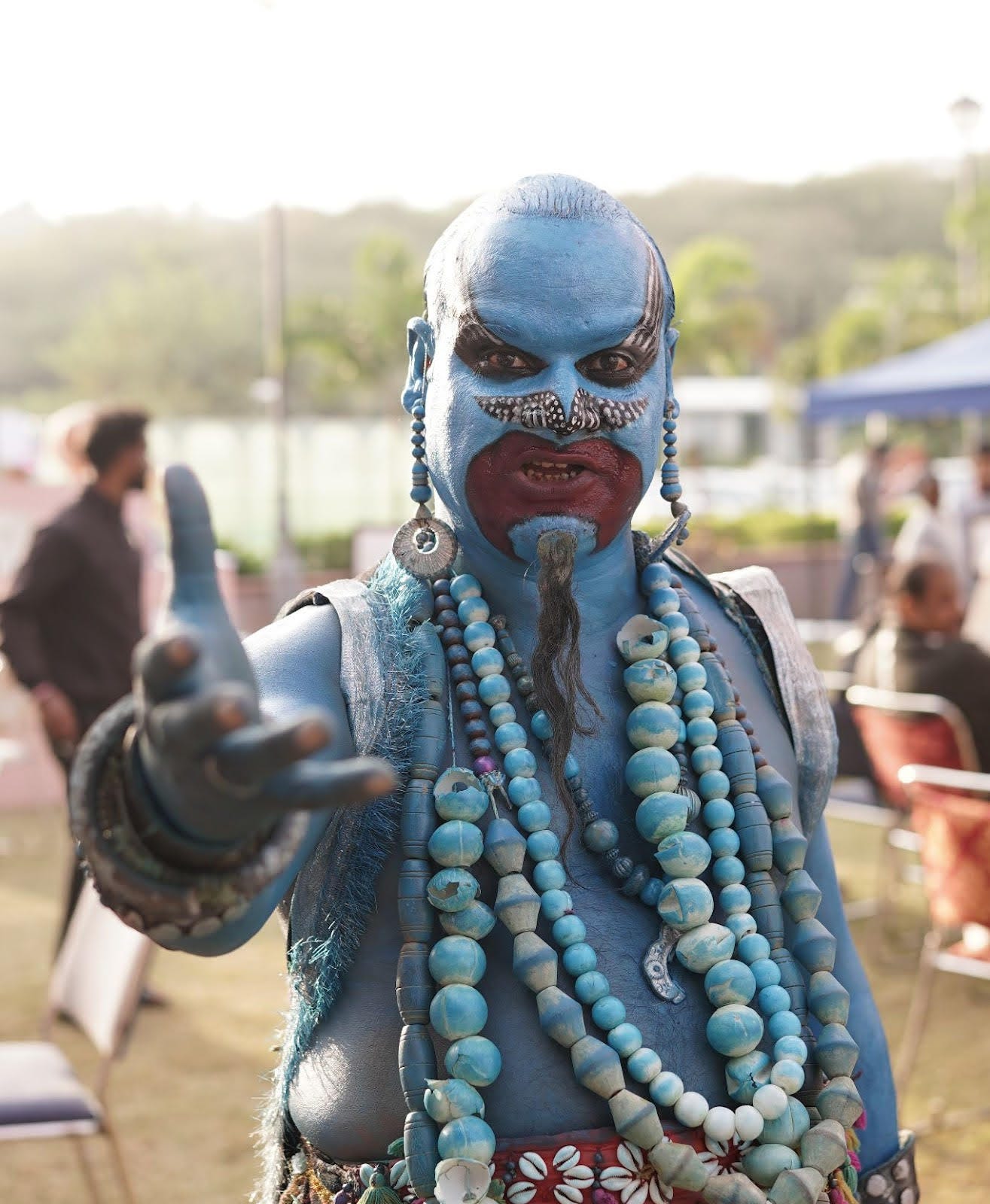
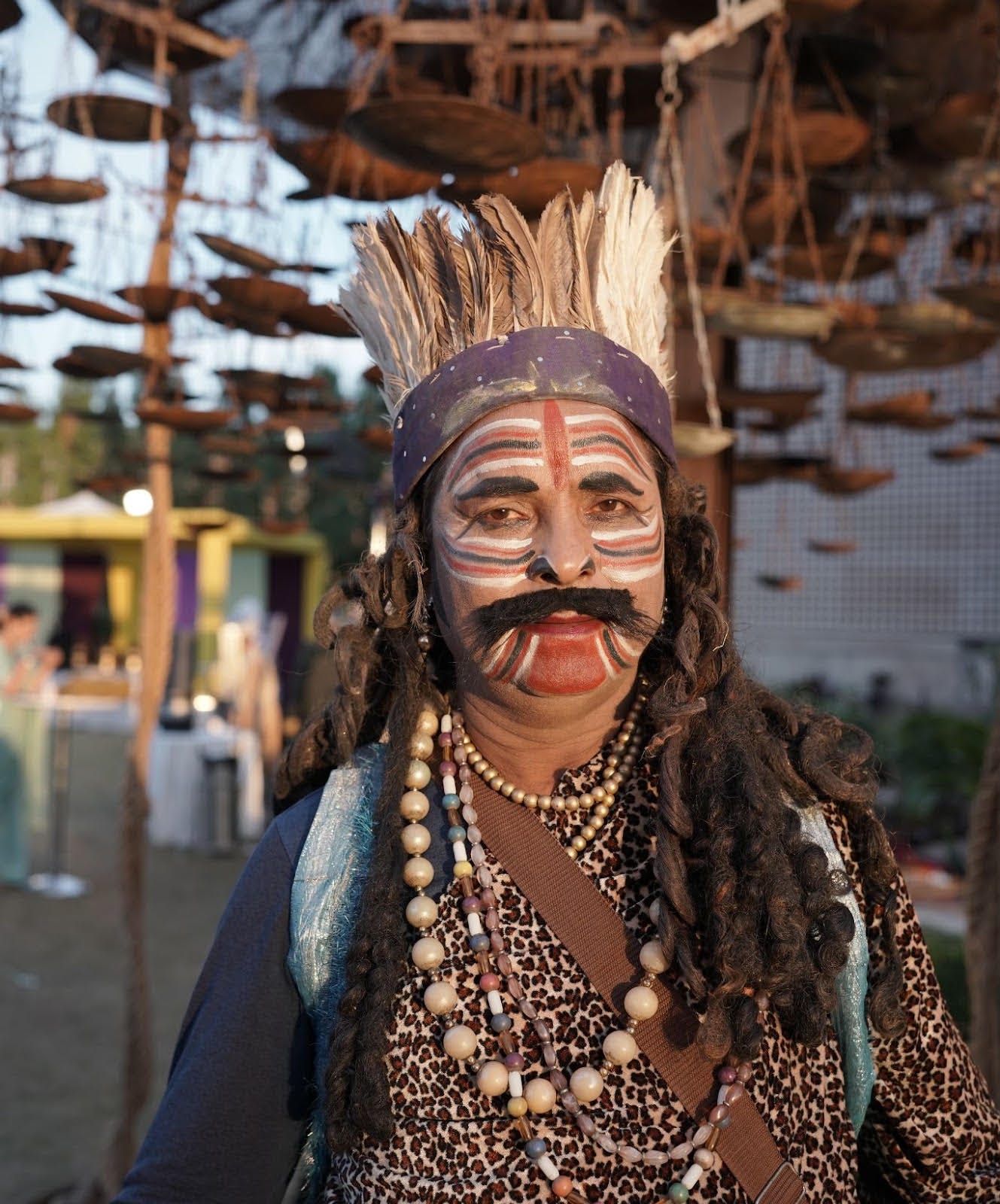
The Mela opened on 6 December, Mahaparinirvan Diwas, the day that marks Dr B. R. Ambedkar’s passing. It felt important that the Justicemakers Mela brought Behrupiyas into the frame. While “Behrupiya” names a profession, the people who carry this art usually belong to specific communities such as the Bhand, Naqqal, Bediya or Bazigar. Their social story is one of sharp rises and falls.
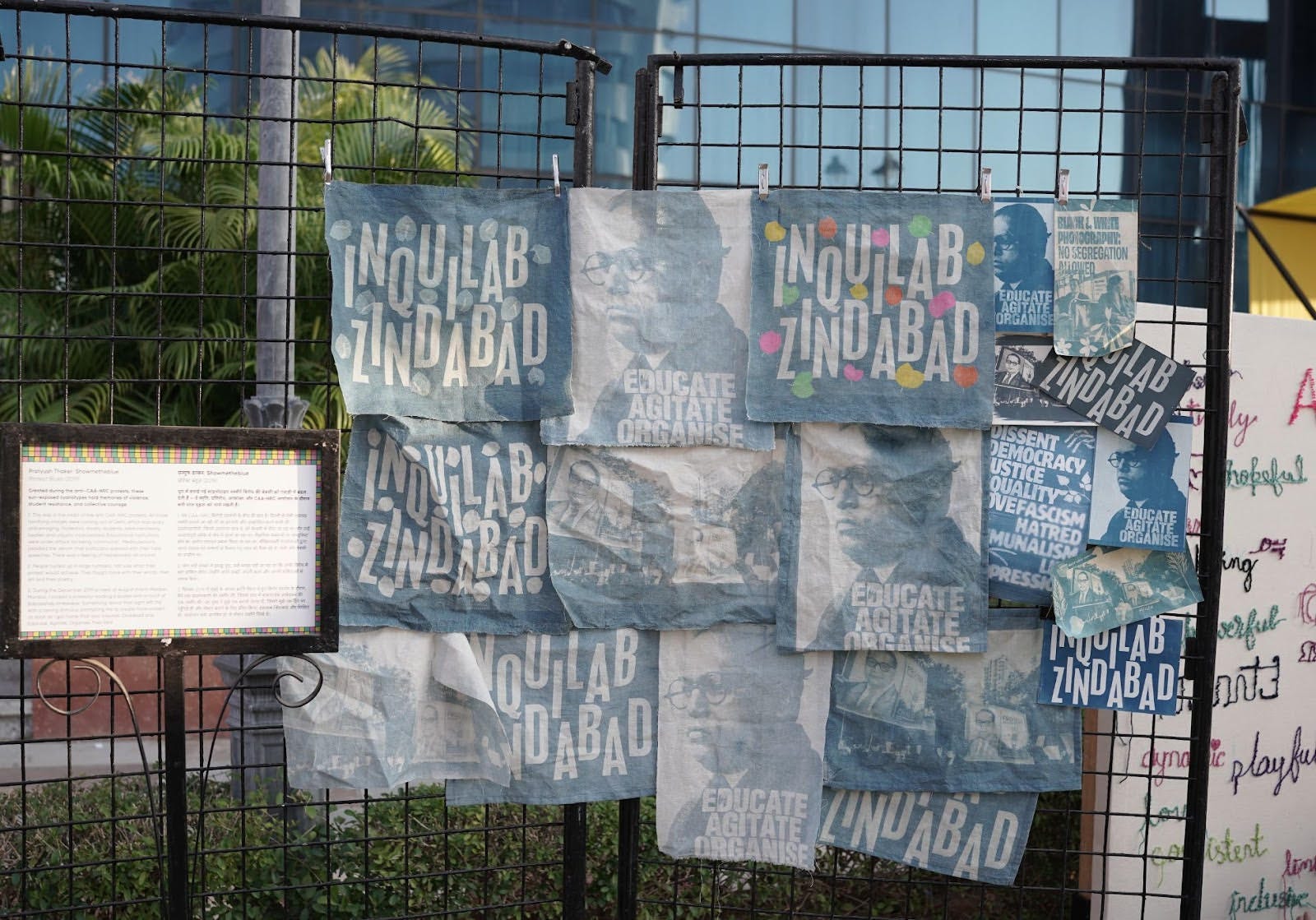
There were times when Behrupiyas moved in royal spaces. In earlier centuries they performed in courts, entertained rulers and sometimes gathered intelligence across rival territories by moving in disguise. Their skill was a resource for power. That fragile prominence collapsed under colonial rule. With the Criminal Tribes Act of 1871, many of the communities that practised Behrupiya arts were notified as “born criminals,” their movements restricted, their bodies watched and recorded. After Independence, they were denotified and became part of the large and still marginal category of Denotified Tribes, with stigma that did not end when the law changed.
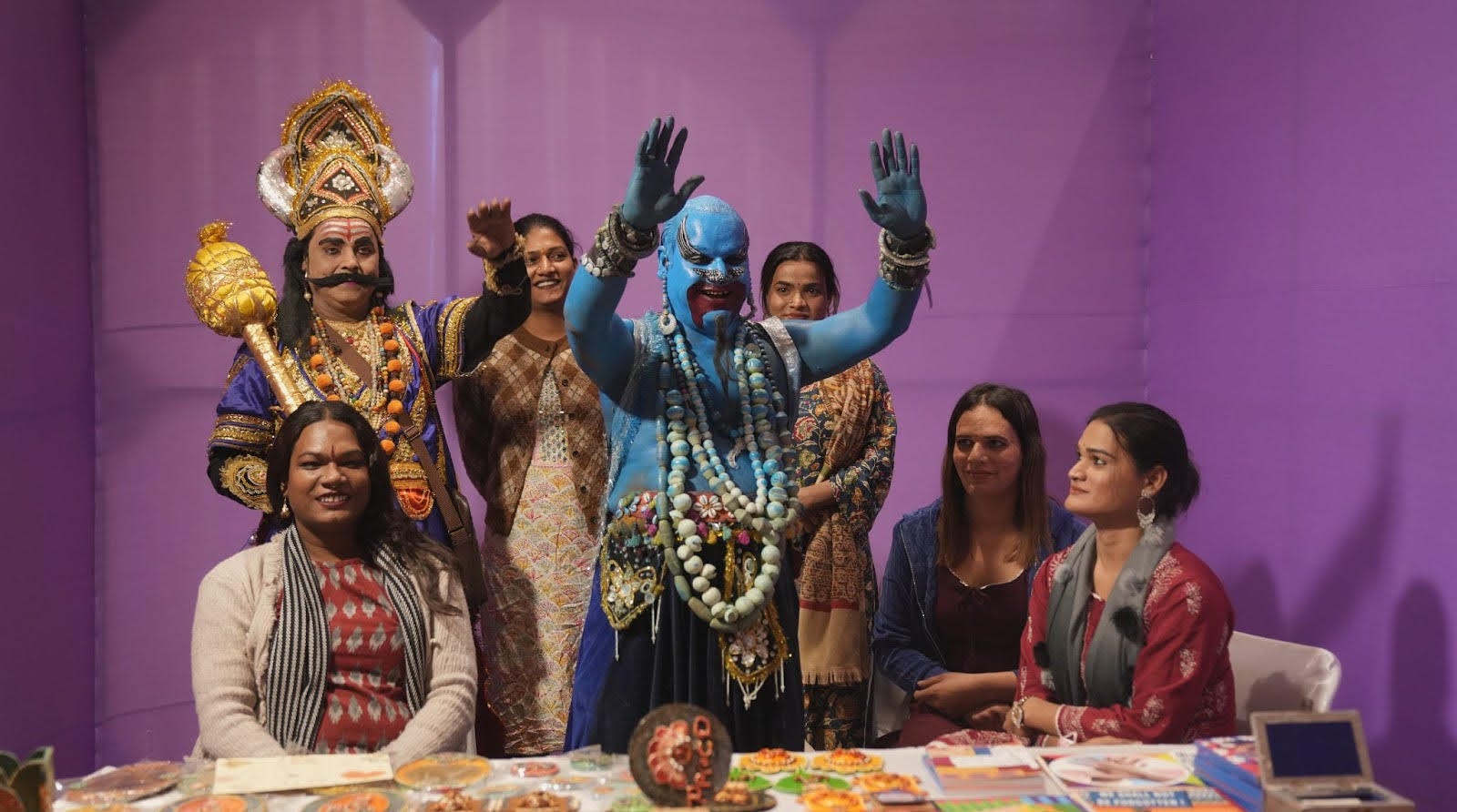
This is the history that stands behind the painted faces that walked into the Mela. A performer dressed as Hanuman or Shiva may be greeted by folded hands and reverence while in costume. Once the costume is removed, the same person may slip back into a social status that is treated as polluting, often barred from the homes of those who sought blessings a few hours ago. It is the paradox of the untouchable god. A time that remembers Ambedkar’s struggle against caste and criminalisation, it felt necessary to sit with this contradiction.
Untouchable Gods and what Praani Listens For
The Behrupiya body troubles the tidy lines of modernity. Painted in silver or orange, wearing jewellery, fur, plastic helmets, bits of found costume, they stand in sharp contrast to the neutral shirts, jeans and kurtas around them. It is easy to mock. It is also easy to sentimentalise. Harder is to ask what this reveals about our own thresholds. Why are we at ease with anthropomorphised animals in film or advertising, yet unsettled when a living person in front of us embodies a langur, a tiger or a god?
Praani’s inquiry sits inside this discomfort. If we say we are working towards coexistence as a concern for justice, then we have to pay attention to those who already spend their lives moving between forms. The Behrupiya shows us how porous the borders are between human and more-than-human, sacred and profane, centre and edge. Their very presence upends a sanitized politics of embodiment that prefers clean categories and controlled scripts.
There is also a question of law here. Legal systems often struggle with those who do not stay in one role, one identity, one address. Behrupiyas, like many Denotified and nomadic communities, were punished exactly for their capacity to move, to shapeshift, to refuse a single fixed occupation or place. The same capacity that once made them valuable in courts of kings later made them suspect in courts of law. That logic continues to haunt how we classify people and how we police bodies that stand out.
To think about multibeing justice through the Behrupiya lens is to open ourselves to a different ethic. An ethic where embodying a langur at a Mela is not a joke at the animal’s expense, but part of a longer, riskier practice of coming close to others. An ethic where the performer who plays god in the afternoon is not discarded as an untouchable neighbour by evening. In Praani, we are trying to learn from such practices rather than erase them. The question we carry forward is simple and difficult. If law and justice are serious about coexistence, can they make space for those who live at the edge of categories, who show us different skins, and who remind us that every room we build leaves someone standing at the doorway.