


Ishwar Lal* sits two rows back from the counselling desk of the lawyers. His rounded shoulders tell of a profession that demands continuous work with his hands. A chef in a busy kitchen? A powerloom operator? I can’t quite tell. I study his face - deep-set liquid brown eyes and well arranged features. A frivolous thought arises - this is a good looking man. If he had half the cosmetics of the urban youth, his would be a face that would stand out in a crowd. Right now it’s a map of worry lines. He peers down at his phone, shoulders slumped.
In a few minutes I know why. He tells Bhavesh, the legal aid lawyer at the desk, that the money from the mediated settlement done two weeks back hasn’t hit his account. The agent for the contractor who he had done a job for and who had agreed to settle his pending dues - all of Rs.10,000 - at a previous mediation facilitated by Aajeevika Bureau, is no longer taking his calls. Bhavesh picks up the phone and calls first the agent and then the contractor. Meanwhile, he gestures to Ishwar to tell his story again, for my sake. He turns his gaze to meet mine and I smile at him.
“I worked for two months on the window frames for a well known hotel - I’m a carpenter - and in the end I wasn’t paid. I waited at the site for a week but I had no money, not even for food, and I could feel my strength ebb, so I came back to my village. After much following up the contractor gave me some money but when it was clear that they would not clear all the dues I called the India Labour Helpline (that Aajeevika runs). The contractor did not come himself but sent one other man to the mediation run by an Aajeevika lawyer at their centre. They agreed to pay 10,000 but it’s been two weeks now and here I am again. No money has come.”
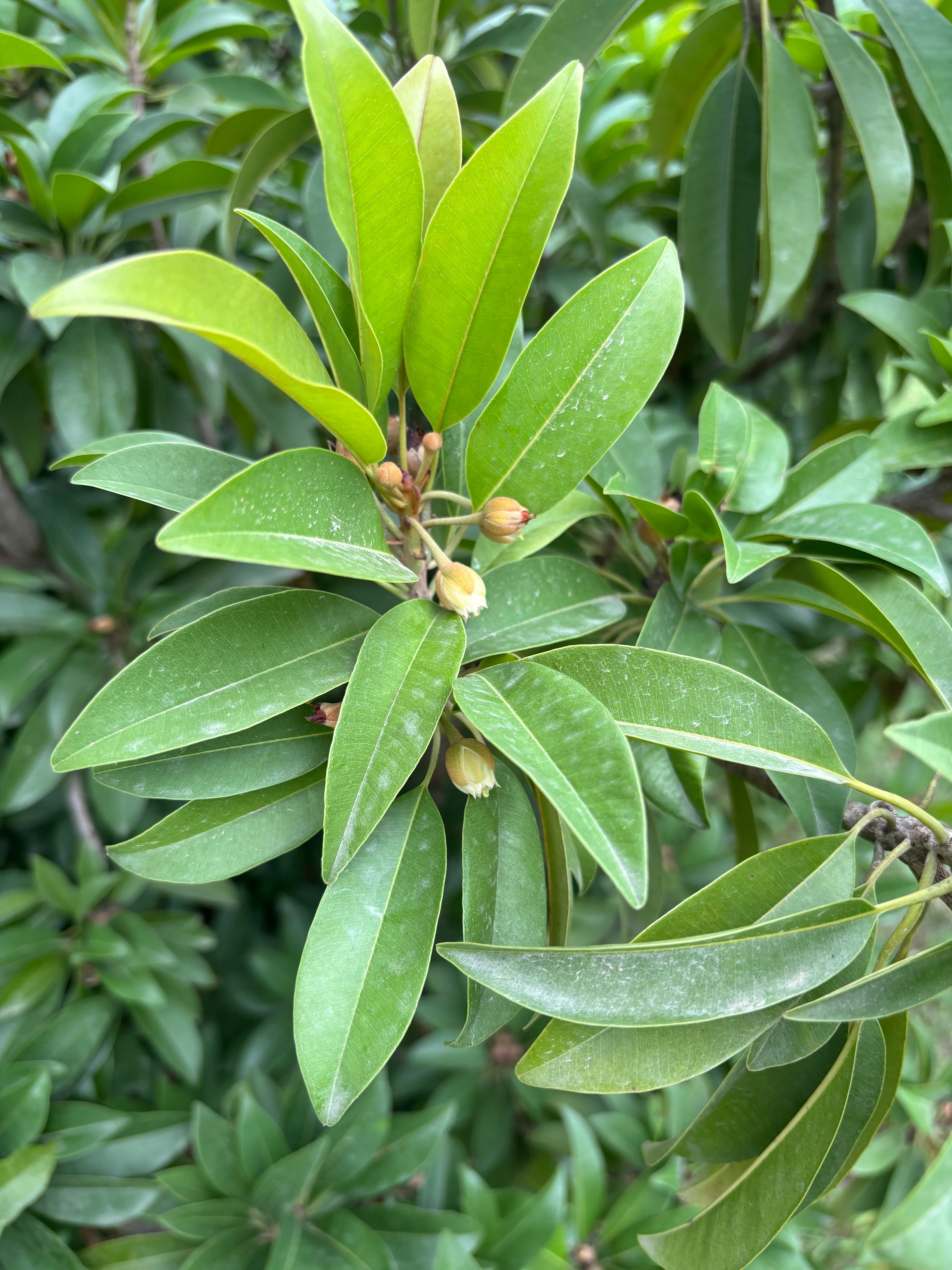
We are at the monthly legal clinic diwas at the worker facilitation centre in Barwada village (Udaipur district, Rajasthan) run by Aajeevika, a well regarded non-profit that’s been fighting for labour interests for 20 years. The centre is a charming, low-slung, stone walled building with broad windows and doors, surrounded by a patchwork of undisturbed garden and this lovely little tree.
About 50 workers are here today bringing their challenges - almost all cases of unpaid wages.
Ishwar swats away a fly - maybe drawn to the chai cup in front of me - but is unable to shake his worry lines. In front of me he scrolls through his Phonepe transaction history for any sign of a payment. Nilesh - 30 rupees, Kolkar Enterprises - 65 rupees, Bipinlal - 32 rupees, Lakshmi - 120 rupees.
Hurrah for UPI, boo to the stagnant Indian job market.
Ishwar waits for an hour while Bhavesh attends to Pannalal*, an older man with a pretty tribal tabeez, who finds it in him to pause from time to time and make a joke with those around him, whilst recounting another unpaid wages story that’s a joke on him.
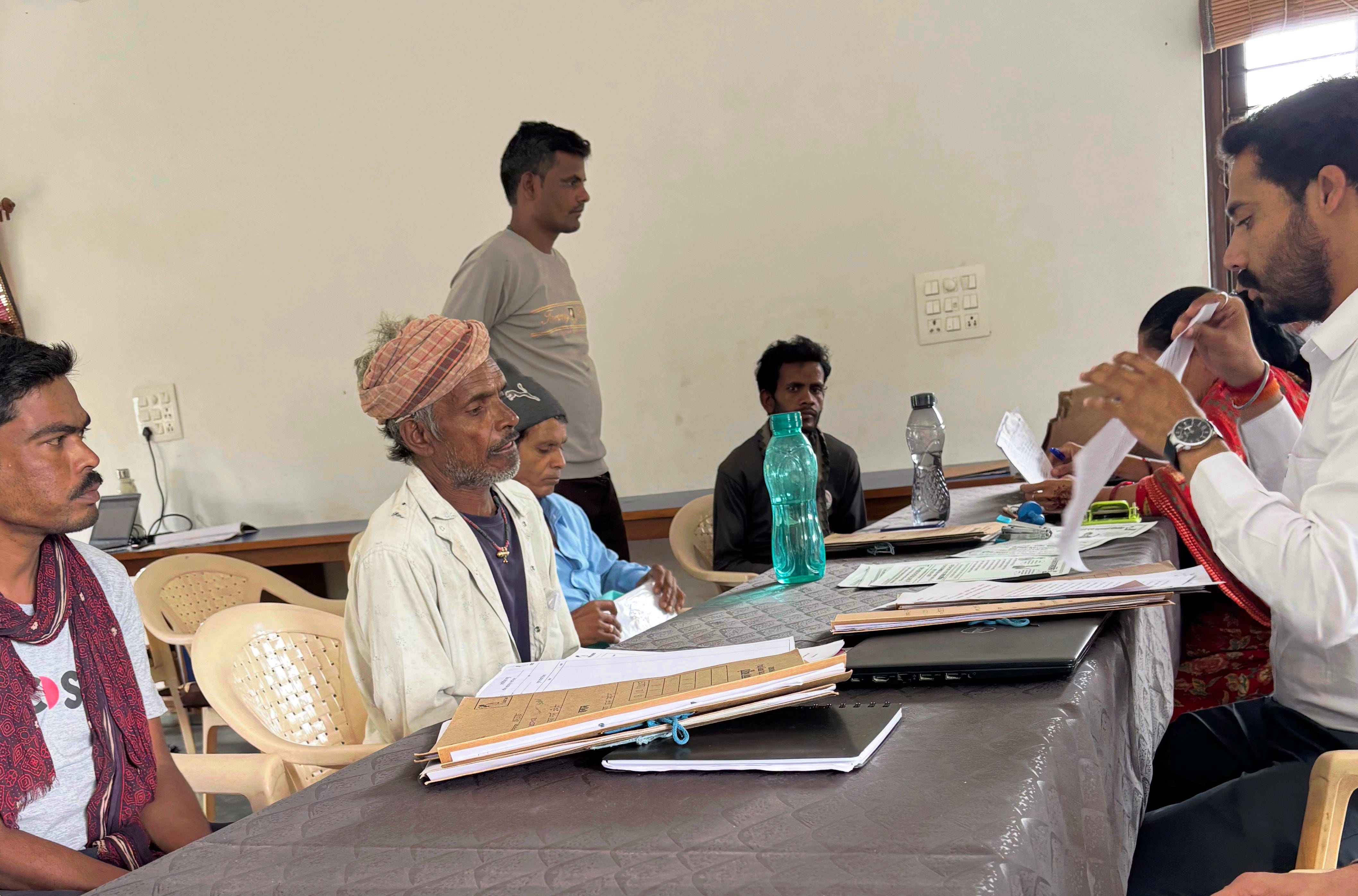
After an hour - in which I hop across to the office room for lunch with Rajiv - the founder of Aajeevika Bureau, an organization that a bottle label tells me is now ‘bees saal, bemisaal’. After a simple homestyle meal whose perfect nutritional balance is utterly ruined by a caramelised motichoor laddoo made by the devil himself, I return to the counselling hall. Bhavesh has managed to get through to the original contractor and is laying out the consequences of not paying Ishwar. I’m not sure there are any but the way Bhavesh tells it to him it’s a strange combination of reassurance and threat. A lot of ‘aapko toh maloom hai ki mujhe x file karna padega aur phir y ho sakta hai process ke mutabik’ [You know that i’m obligated to do file X and then there is a risk of Y happening according to the process] that results in the call ending with Bhavesh having convinced the contractor that he is his savior as well. One tranche of the money comes in immediately and another is promised for the next day.
It’s like Ishwar has a darshan of himself. His worry lines finally smoothen over and he takes a breath. After thanking Bhavesh he turns to me and scrolls through photographs of furniture he has developed. It’s all very good. He gets up to leave and, in parting, says “Yeh mera shaunk hai”. [This is my passion].
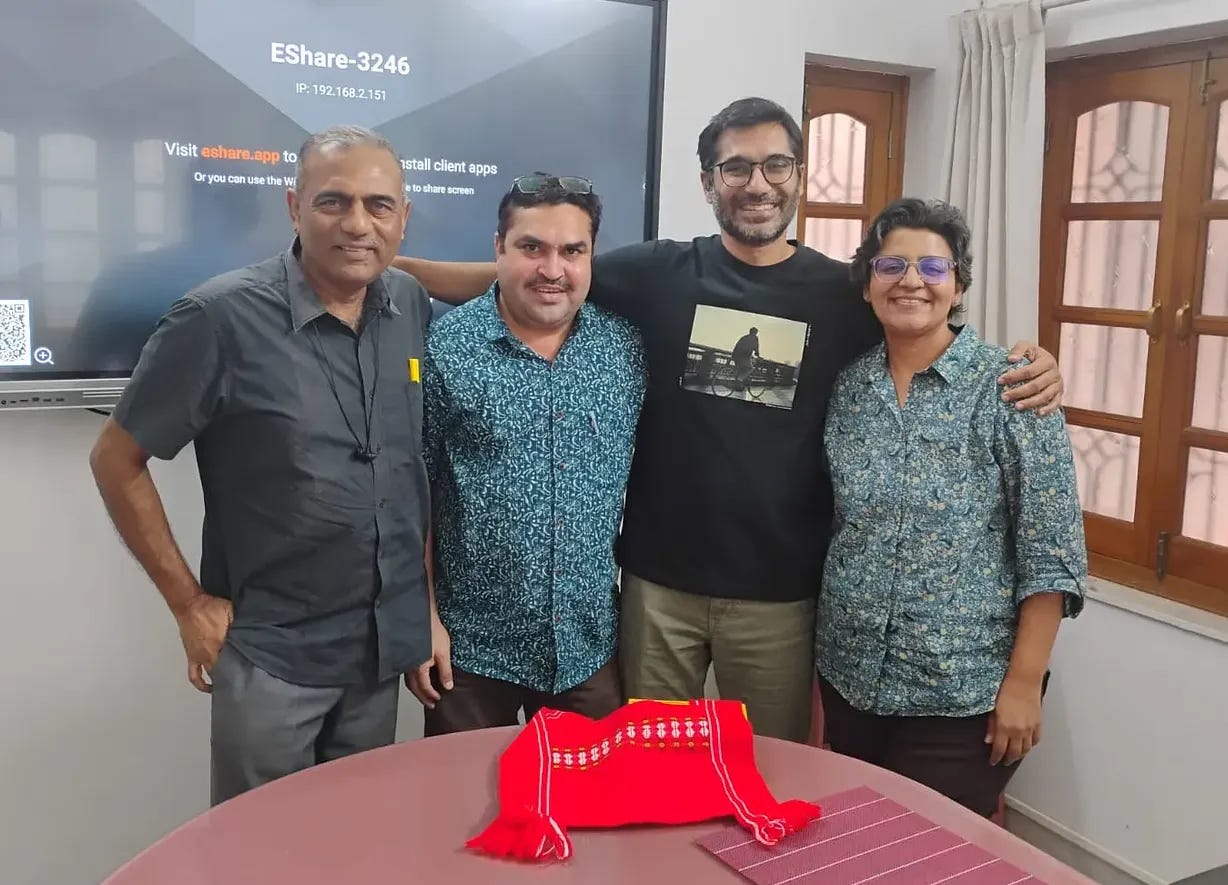
Pannalal, on the other hand, is still scavenging little jokes from the big joke as I depart for Udaipur with Rajiv, Santosh and Divya, some of the leadership of Aajeevika.
The Aajeevika-run ‘Indian Labour Line’ receives 500 calls every day. Almost all are cases of unpaid labour dues, though an increasing number of workplace harassment and injury cases are coming in of late. The staff at the Labour Line centre use a combination of counseling and mediation to bring the contractors to the table and arrive at some settlement.
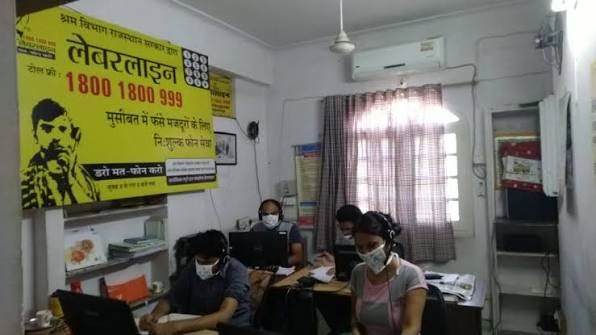
During Covid, they recovered over 1.5 crores in unpaid wages, and since then they’ve recovered 55 crores in wages for tens of thousands of workers. And even though their roots are in labour work, and they’ve never really broadcast their credentials as an ADR (alternate dispute resolution) institution, they won the Agami Prize for Justice Innovation in 2020.
Pratibha who’s been with the Labourline for over a decade tells me that sometimes it takes multiple conversations to understand what has happened. Such is their experience that they can fill in most of the details and decide the course of action. Documentary evidence is almost never in place, and persistence and persuasion count hugely to convince contractors to cough up money.
I recount my own encounter - in 2024 - of watching a young adivasi man enter the office with great hesitation and stand in a corner. When attended to, he mumbled that he had been aggrieved and his wages not paid. As the centre staff probed further the mystery deepened because the final dues, owed to him after a limited payout, were relatively small. And it just seemed unlikely that he would come all the way to the centre for this issue. “Theek se batayiye, kya hua” [Explain peacefully and properly what has happened], repeated Pratibha at the centre. After much wandering, he said “Gaali diya” [The contractor abused me]. Slowly everyone turned to each other, the pieces all in place. The blow to his dignity had carried him almost 50kms to the centre. An apology, was all he wanted.
That experience convinced me that while great technology can be brought to the work that labourline is doing, what is truly precious is one human offering to listen to another. While this may be a great insight for me, it’s common knowledge for Pratibha and the handful of others who take 500 calls everyday and listen to the stories of the one shared epic produced by modern India - the great labour migration. An epic at the end of which, the urban Indian is almost certain to be asking “Shram kaun tha?”
I’m here in western India to understand, first, what is this great migration through the lives and places of its protagonists, and, second, how Aajeevika’s approach to addressing the justice challenges of the migrants can be expanded and evolved. We’ve long known Aajeevika to be one of the most powerful organizations in the field of justice and their leaders and staff are now my friends. With my friends, I’m going from destination (where the migrants come to work and live) to source (where they come from)
The day before the centre in Barwada, I was in Ahmedabad, a city witnessing a massive construction and industrial boom. The naka at Akbar Nagar is one of the places where migrants pour in every day to look for jobs. Contractors connect with them here and slowly the naka empties out by around 10/10:30am, leaving the older men and women who aren’t favoured for hard labour work.
“Humaari stithi labour se bhi kharaab hai" [Our situation is actually worse than the labourers], tells us a petty contractor who visits the naka almost every day. “Humaara toh lakhon mein paisa atak jaata hai aur kyunki hum labour nahin humaari kaun dekhega” [Lakhs of ours get stuck and because we are not labour no one cares].
In all of this there is a deafening silence on the role of the courts. By and large that is totally written off. Some matters have to go to court but there seems to be a general consensus of the stated and the unstated that solutions must be found elsewhere - in the power of the collective, or the savvy of mediation, or just relationships. Ranjit, one of the local Aajeevika lawyers, confirms that when documentary evidence is scant, the legal aid lawyers bank on the Aajeevika name, existing contractor relationships, and the slippery morality of the labour market.
That afternoon, before leaving for Rajasthan - some of the most prominent ‘source’ locations of migration - I visit Narol, a vast arrival city. Here there are many textile workshops supplying pieces to factories that serve well known Indian brands. Summer temperatures inside the top floor workshops easily cross 50c. The way the industry works, a single garment is broken down into its parts - a pocket, a lining, a collar - and thousands of such pieces bought from these workshops. Let alone being an ‘employee’ (all workshops supply on a piece basis to contractors who sell to the companies) no one even has the dignity to say they made a whole item. Those working in the area attest to the fact that the chain of contractors goes on increasing - labourers work for one, who supplies to another, who supplies to another, who supplies to the factory - and when a wage dispute manifests we have the proverbial main toh tha hi nahin (I wasn’t there at all) situation. Aajeevika’s teams - worker union representatives and paralegals - slowly uncover link after link to find the person most worth mediating with.
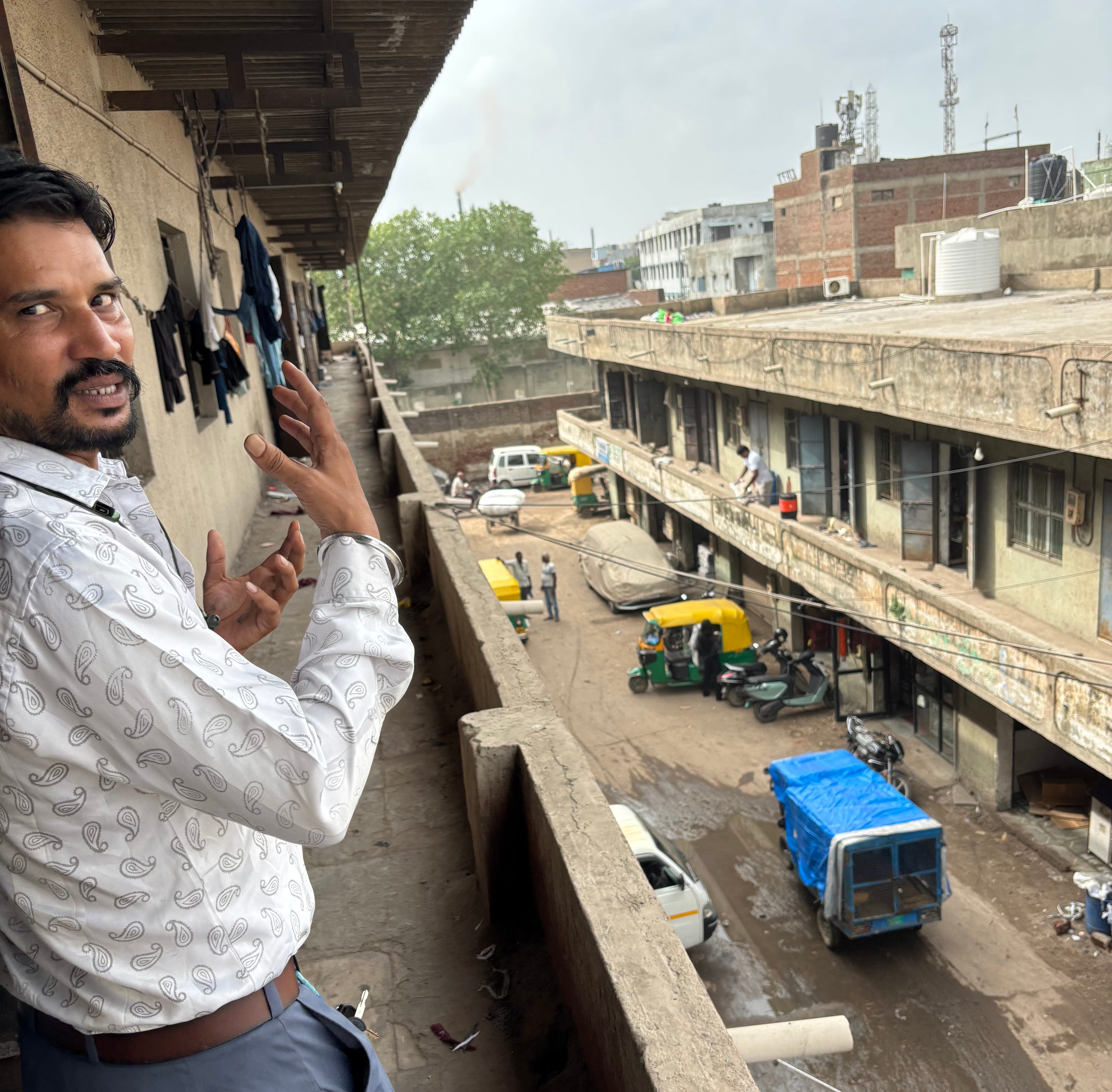
Sitting with the union leaders I understand how the shape of labour relations have changed. And its eerily similar to gig work. In fact, it is gig work. The promise of flexibility and ability to do more and earn more sold to replace regular employment. Then the ‘gig price’, in this case the piece rate for the garment-piece falls or stagnates, and more people enter the supply, and the net income of the worker falls. The ‘piece-ification’ affects even those who are employed pushing down the kind of skills needed to do the work and making them more substitutable. Some of it is a new story, and some of it the old story of automation playing out over a century.
We end that meeting with chai (in tiny ‘shot’ cups), khaman and pakodas. Guddu leans across to tell me about a 24 year old boy who was electrocuted at a workshop a few days back. He had been crying hoarse about a loose connection but no action was taken. The contractor drove around the township with the body in the car uncertain of how to deal with the situation. Guddu insists on showing me a bit of a video of the boy in the car. It is unbearable. Not because the boy - in a fake Nike tee and jeans - is dead, but because he is so alive.
In the evening we leave for Udaipur traversing the Aravallis at Shamlaji where the weather noticeably turns to the cool mist of the monsoons. The dust on the faces of my co-travellers Smriti (a senior Aajeevika leader) and Santosh (who runs the India Labour Line project) melts in the cool hill air and we play our favourite playlists till we get to Udaipur late that night. Tujhse Naraaz Nahin Zindagi [I’m not angry with you life] is my contribution.
It never rained those three days I spent in Gujarat and Rajasthan - in otherwise peak monsoon season - and fragmented properties and climate change are hastening the great rural to urban migration.
As these millions leave their homes of hundreds, even thousands, of years, who will watch out for them in their new homes? Even though the need of care extends far beyond labour disputes, institutions like the India Labour Line are vital lifelines, offering succour and support to those who must feel very very alone.
* denotes that the name has been changed for privacy.
Some useful readings if you wish to know more:
The Migration Story - Does a fabulous job covering the journeys and lives of India’s migrant labour
Aajeevika Bureau - Aajeevika’s own website
Welcoming America - An initiative in the USA that I hope to see inspire similar initiatives in India. Imagine a Welcoming Bengaluru!