


We have never truly been just human. We are a household of many beings that make us, us.
This simple fact changes how we circumscribe our moral concern. What follows is a photo essay on coexistence. It traverses from what our bodies already show us about shared life, to spiritual and philosophical vocabularies of relation, and finally to everyday city practices that keep care visible in public.
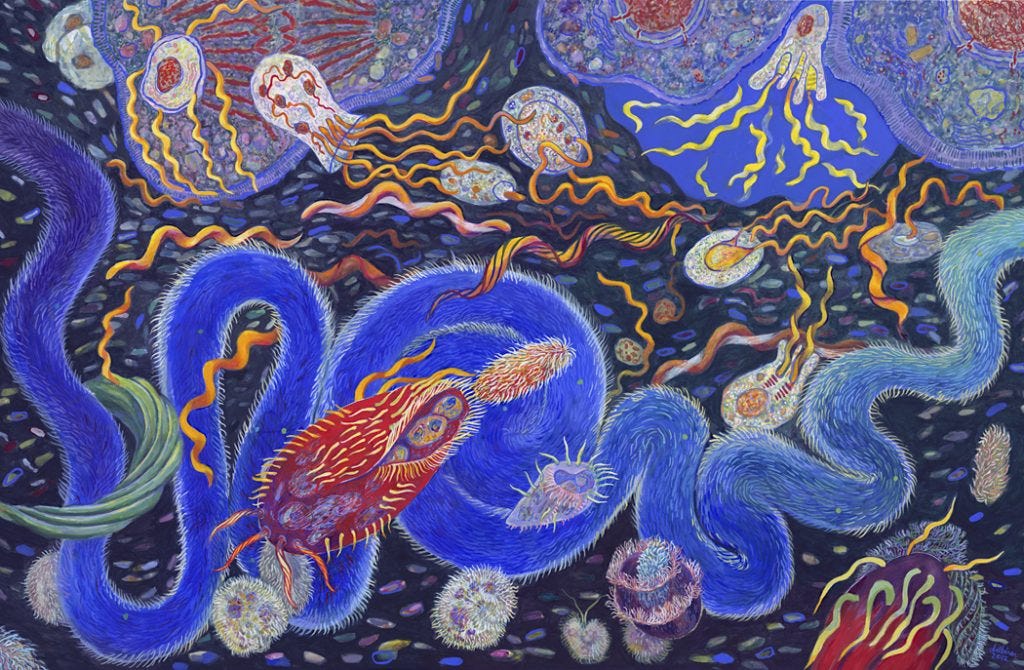
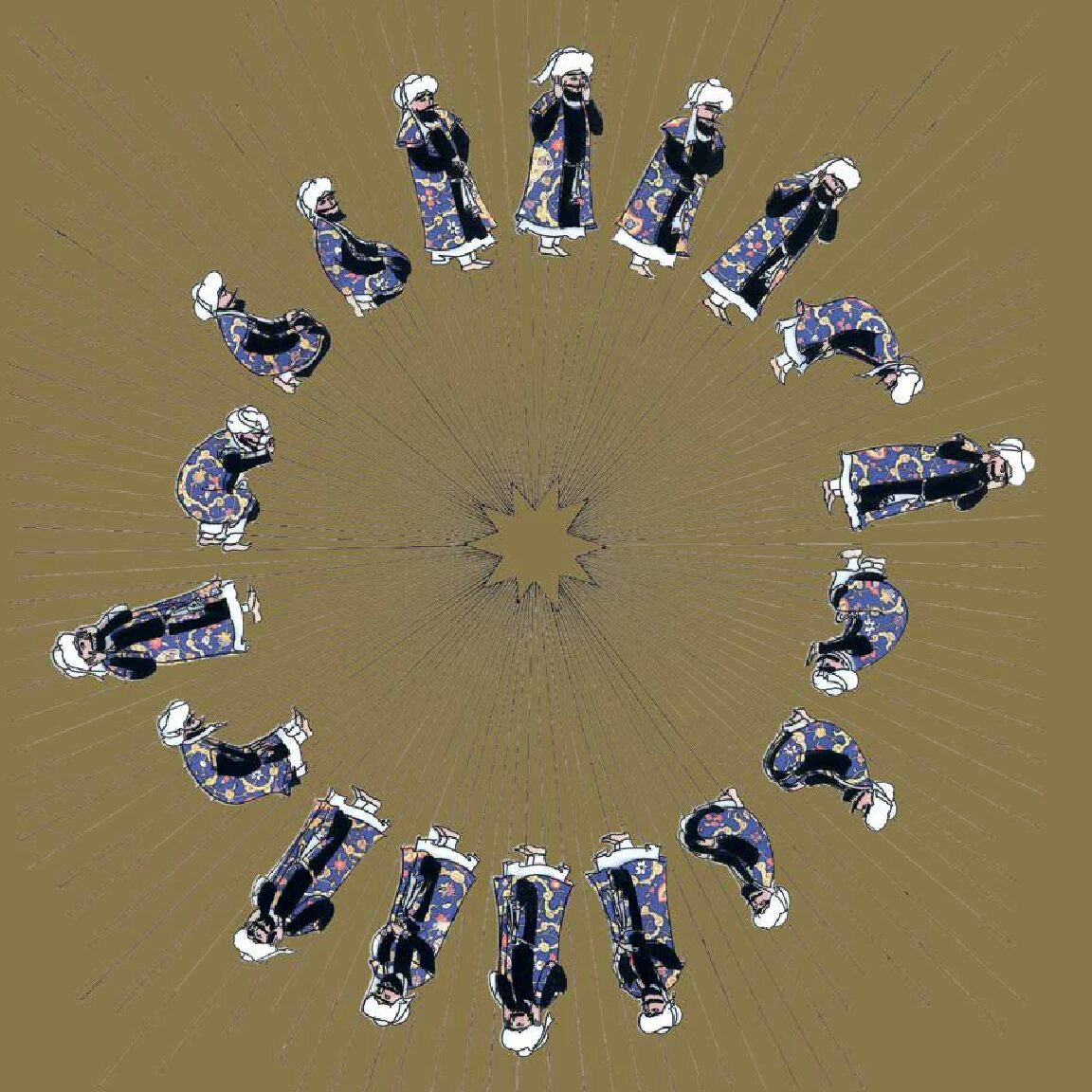
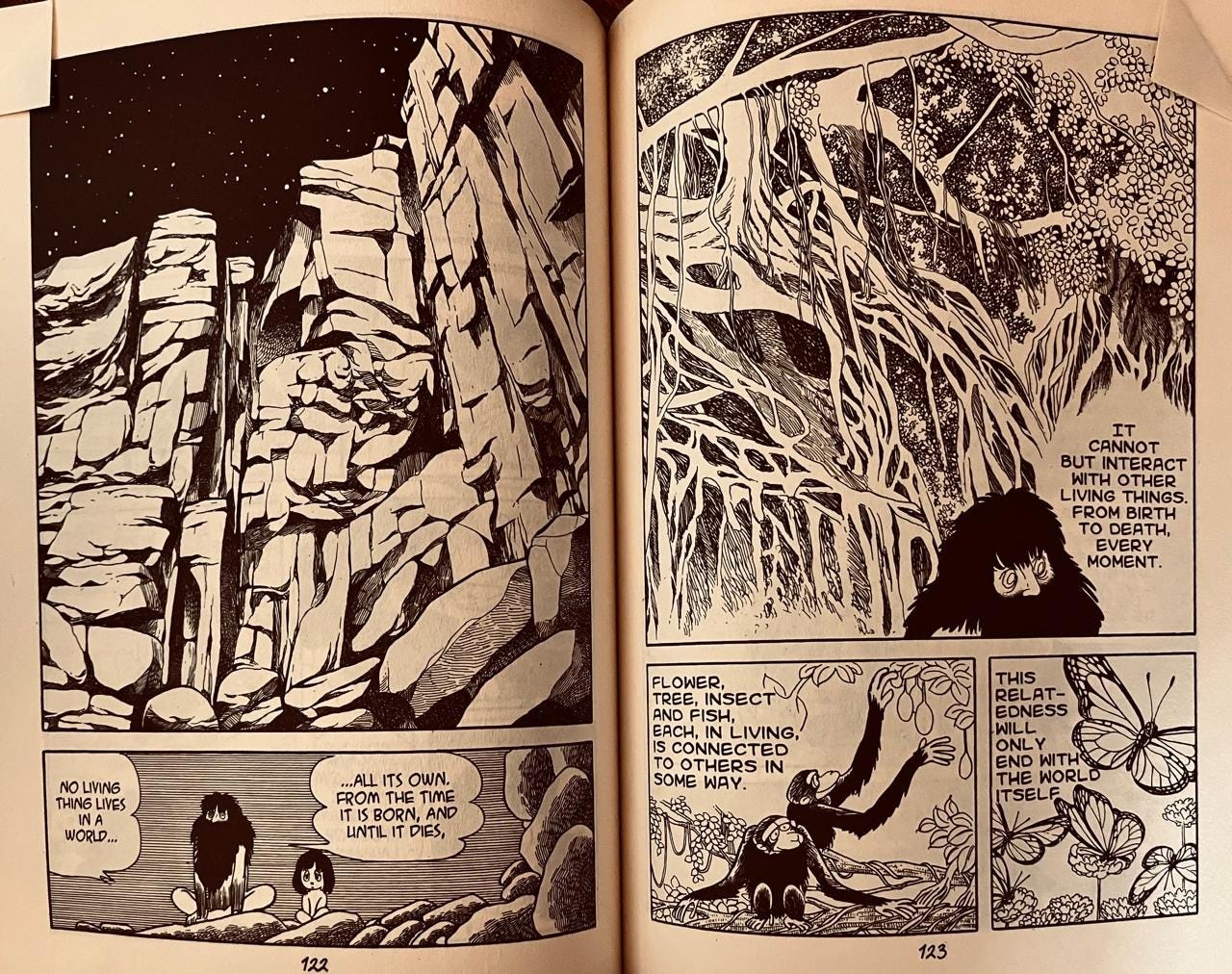
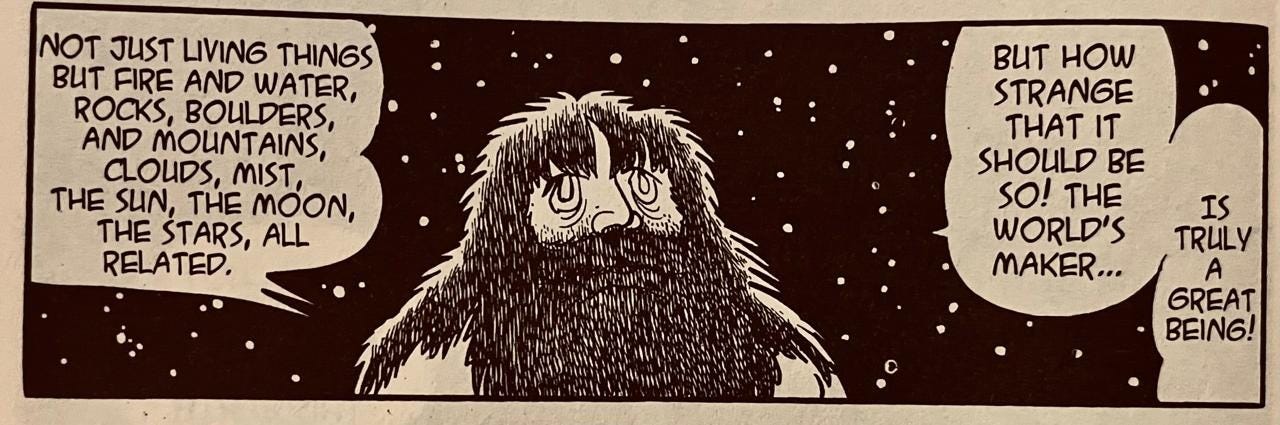
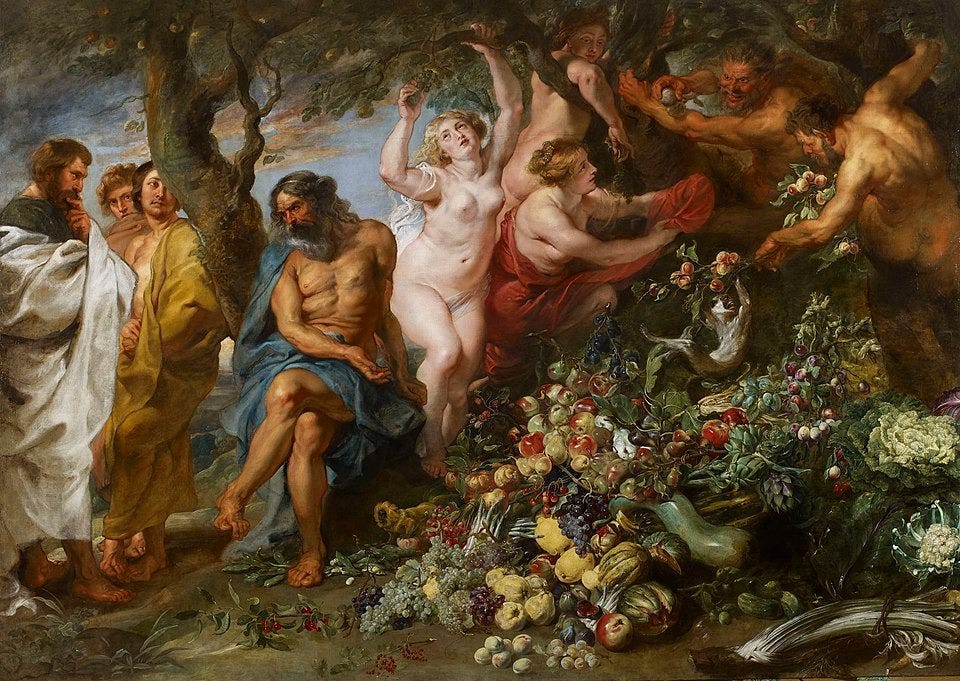

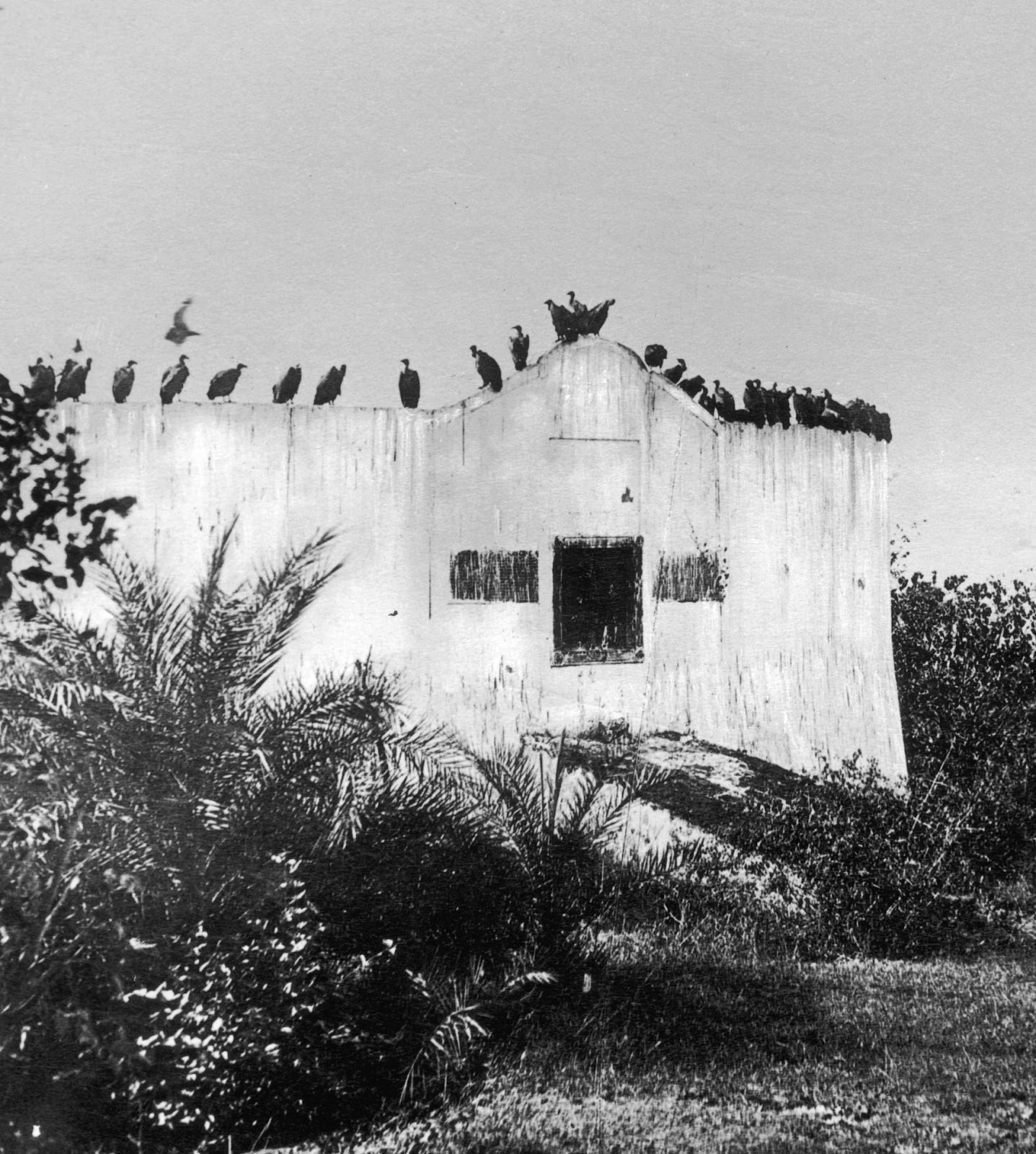
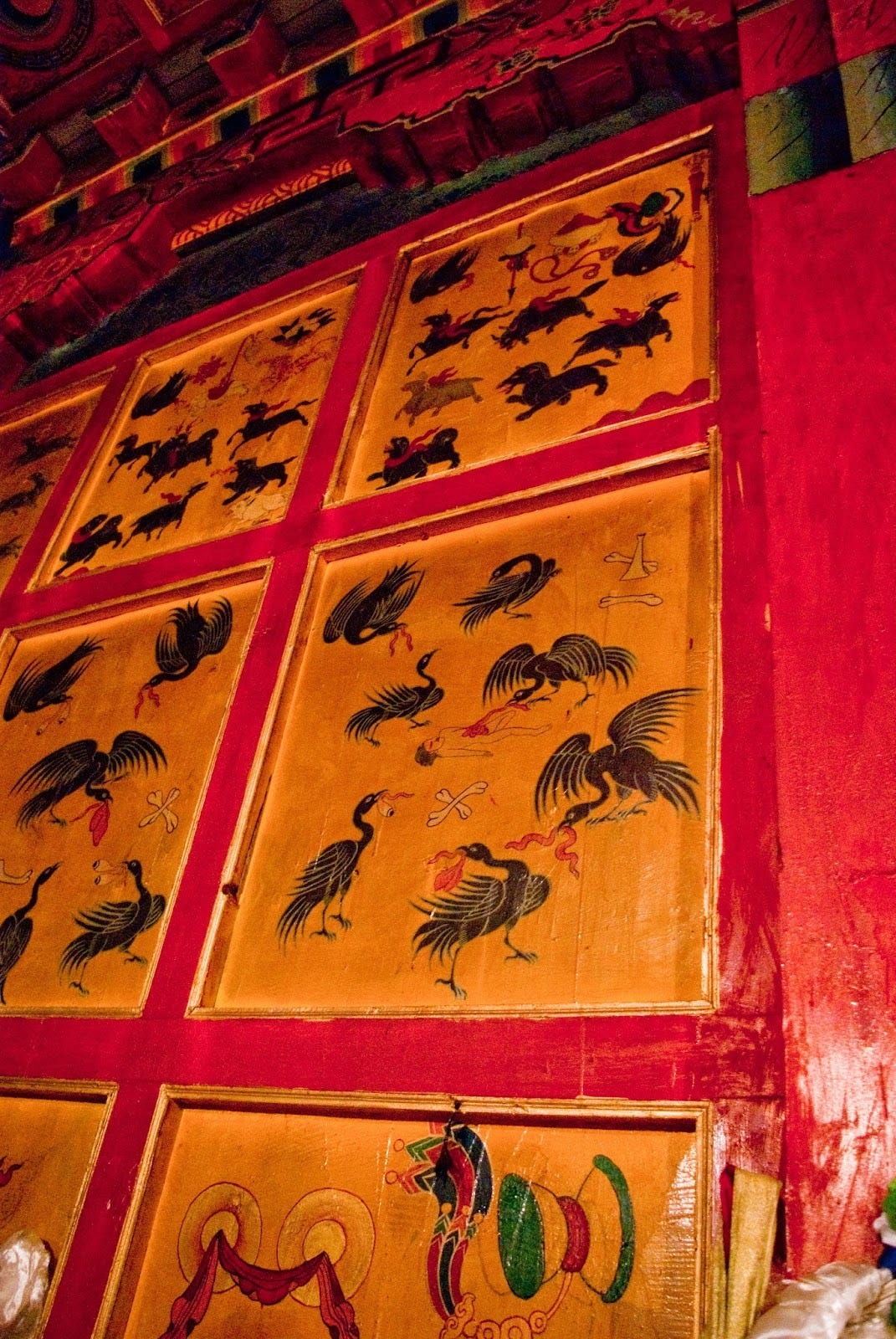
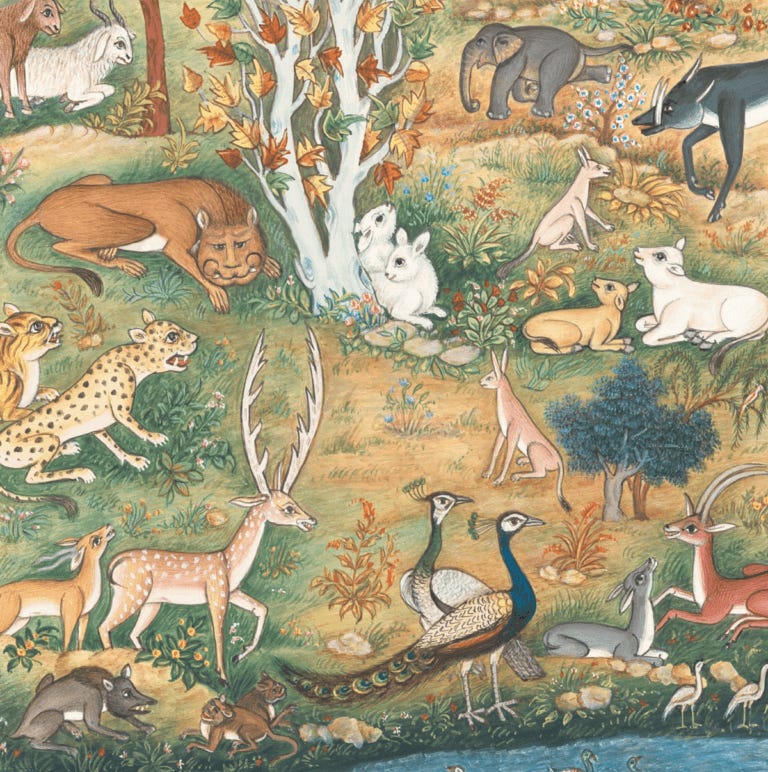

Across these and many other traditions, care for animals, land, and the living world is treated as justice. It is a way of recognising that life is not outside our moral concern, and that responsibility does not stop at the edge of our own species. In many Indian cities I have visited, I have seen people embody this memory, when they carry food to street corners to many community or “stray” animals. They are often called Good Samaritans but I wonder if this term fully capture the essence of what they do.
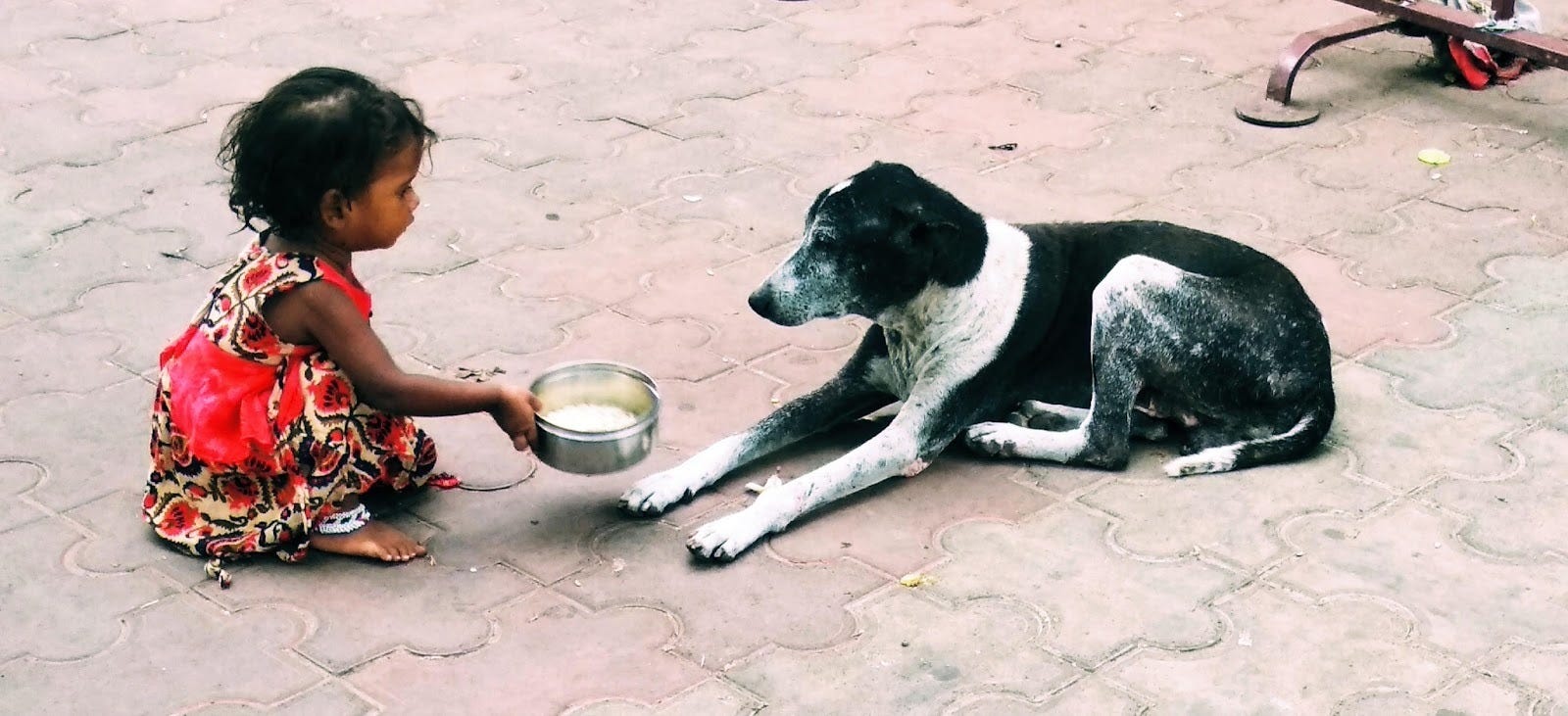
I think Good Samaritans are memory-keepers of a lost anatomy. They seem to remember the essence of the spiritual stratigraphy of this land, i.e. traces of care and justice which sit deep in the landscape. Their care brings back a wisdom that has always been with us, and it asks a hard question of the world we have built: what does it mean to share space?
When Good Samaritans practice commensality - the practice of eating together - in street corners, the metaphorical table emerges as the cracked pavement outside a tea stall.
They also expose a crucial gap: care is often practised in public, but it is rarely recognised as a public value. This is why the Good Samaritan becomes such a disruptive figure in teeming Indian cities. Their daily practice embodies an ethic of care, even as they are pushed to the margins, questioned, and sometimes called a nuisance. The neighbourhood feeder unsettles the idea of the person as a sealed unit, and shows in plain daylight how we survive through relations and shared dependence, how the world - and life itself - is co-constituted.
what does it mean to share space?
Our legal system can take a cue from this. People flourish when they are situated in a web of relationships with the alive, breathing earth, and with each other. When Good Samaritans practice commensality - the practice of eating together - in street corners, the metaphorical table emerges as the cracked pavement outside a tea stall. Sharing food with community animals is a radical act of care because it insists that the city is a shared space, a place where lives are entangled through waste, water, heat, hunger, fear, and comfort.
For a long time, people working on law and justice have argued that care sits close to justice, and that fairness depends on the moral orientation a society carries toward life (See for instance, here, here, here and here). Law’s promises of fairness gain depth when they take seriously how we treat living beings in everyday governance.
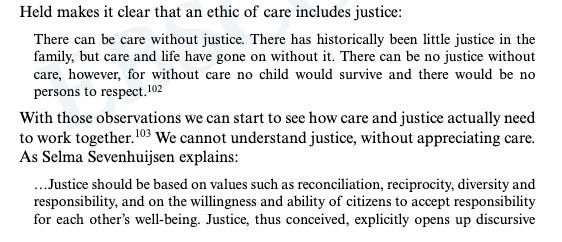
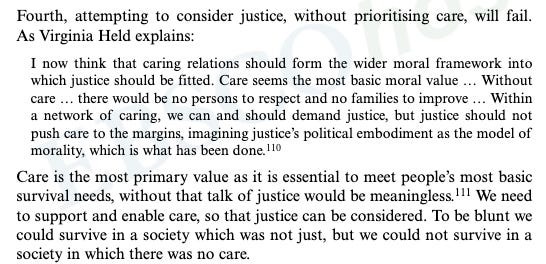
Some parts of our systems still carry an atomised view of the person, and an anthropocentric paradigm that prizes independence over shared dependence. In public debate, this can make animals and habitats appear mainly as “problems” to be managed, rather than as lives and relationships that exist because of mutual care and long-term responsibility. The point is not only that cruel acts occur, from judicially sanctioned hostility to administrative violence, including reported incidents where local authorities have ordered mass killings of dogs. The point is the frame itself - if law treats care as unimportant, it will keep reaching for the same instruments: control, removal, killing, sterilisation, ‘management’ and the steady narrowing of our moral circle over who counts.
What could it look like for law and governance to bring these lessons in, in practical ways? Municipal rules can protect feeding and watering practices with clear guidelines. Courts can widen notion of the amicus curiae to include whose observations count as useful evidence, including local residents who document neighbourhood animal presence, birdlife, heat, or water quality through citizen-led tracking and simple records. Public processes can also broaden participation, so people with close, agentic relationships with community animals are part of how rules are framed.

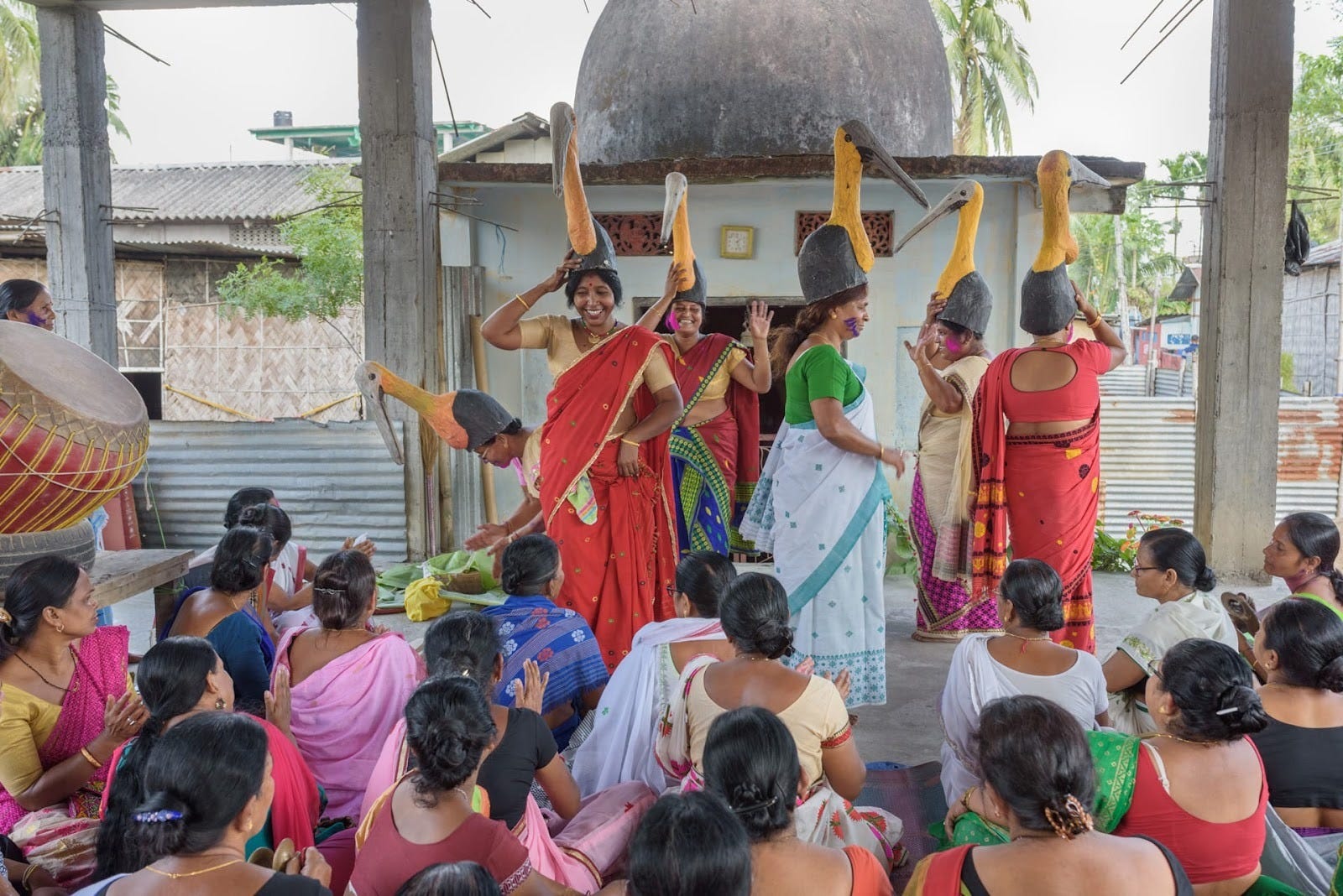
This is not a distant dream. Care for non-humans is being instilled and maintained as a public value in Assam for instance in the case of the Hargila army, and in many other places. Thus, it is certainly possible in our world. We need a jurisprudence that remembers that the human being does not end at the skin. We extend into the street dog, into the tree, into the fungal network that sustains our soil. We show up for animals not only because we are kind, but because we are unfinished without them. Until our laws can speak of them with care, until our justice system can recognise agency in its many beautiful forms with the same seriousness it recognises corporate property, our work remains incomplete. We must keep extending the hand, until we can no longer tell whose hunger we are filling, theirs, or our own.
Shardha Rajam is the Founder of Courts of the Living. You can listen to the entire podcast series here

Beautiful! I love the simple framing of Good Samaritans. Also that first painting by Shoshanah Dubiner is divine! The type of art I aspire to make