


I grew up in a Bengali household and fish was never just food.
A dish made with fish had meaning- different types of fish would be cooked depending on the occasion- for comfort, for celebration, for a get together or just because it’s a Sunday and Hilsa was in season! Each type of fish, each recipe chosen depending on the occasion.
I remember going to the fish market with my father and being given instructions on how to identify ‘fresh’ fish. In hindsight, it seems funny that we checked the gills for its redness or poked the body for firmness to determine its ‘freshness’ and taste! In reality, it was a dead fish, stacked neatly on top of others over a shimmering pile of ice.


Packed in ice, the fish are readied for sale
Buying live catfish from a grimy tank where the fish would be jostling for space was again a special occasion. Catfish can stay alive long after being taken out of water. So back at home, I would watch from the kitchen door as my mother would stun the fish in the sink with a small wooden paddle before cutting the pieces. The body parts would writhe and move violently even after being thrown into hot oil on the gas stove- the resulting dish was never seen or thought of as anything else but a nutritious and tasty meal for the family.
And this was and continues to be a part of every Bengali household even today, including in metro cities like Kolkata.
Familiar cries of ‘Pona maach, jento maach’ (younglings, live fish) are still common in lanes where a hawker walks around with a cycle, a weighing scale and heavy buckets tied on either sides selling the coveted fish.
For Bengalis, fish is not just food- its reverence, identity.
Learning to see Fish
Fish as food was one part of the relationship. Parallely, I watched natural history documentaries showing the deep blue underwater worlds of fish- schools moving in a coordinated manner, fish jumping out of the surface and gliding through the air, using pebbles and spitting water to hunt- On the screen, fish were intelligent, colorful, sophisticated. On the plate, fish was something to consume, devoid of its existence.
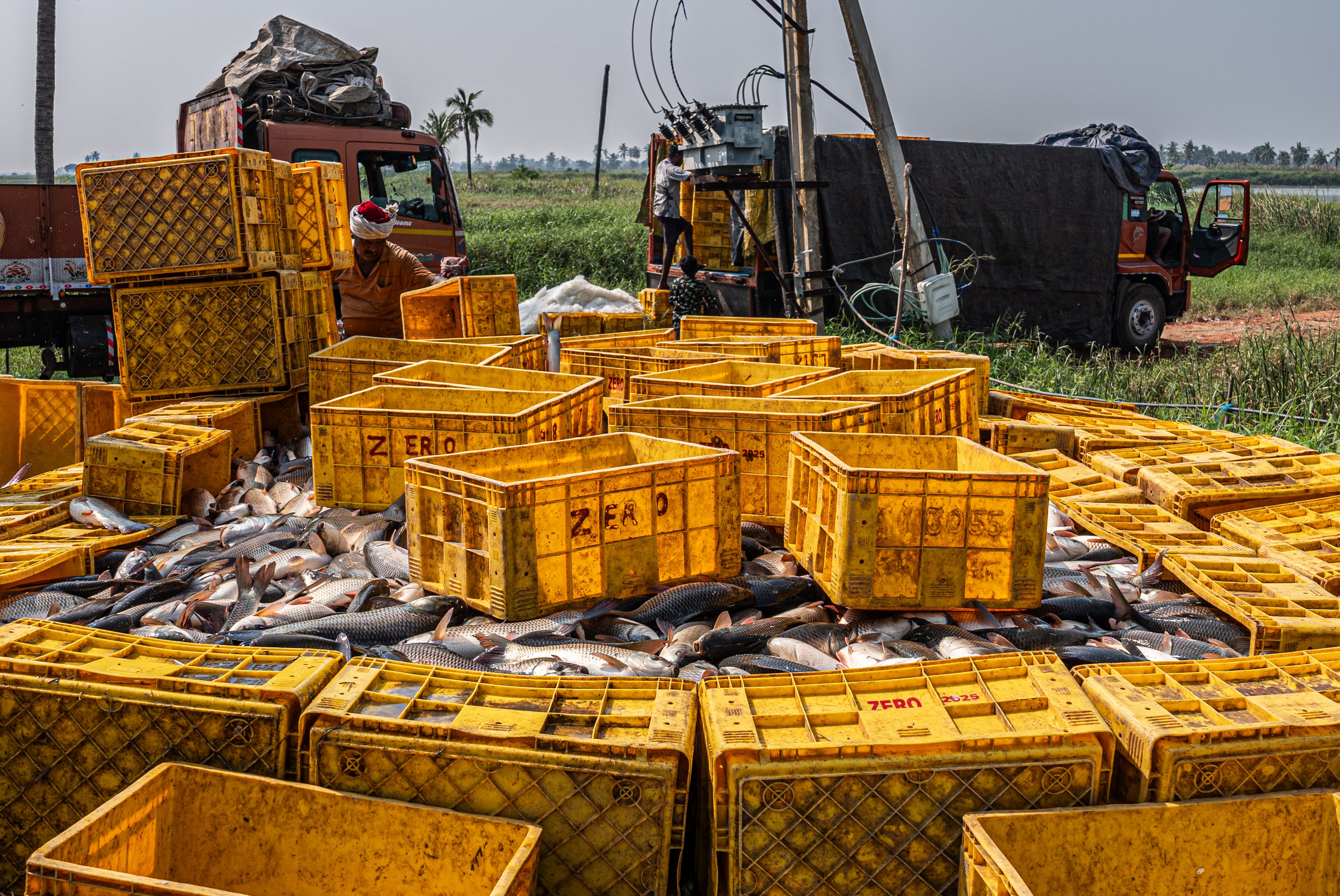
At the edge of the aquafarm, fish are packed into crates beside waiting trucks.
The first time I visited an aquafarm for an assignment to document the harvest practices of Rohu and Catla, I came back with many contradictory observations. I watched the workers drag in the net, the fish jumping high and being struck by the netting and falling back in the water- the struggle increasing as the net got pulled closer and closer to the shore reducing space.
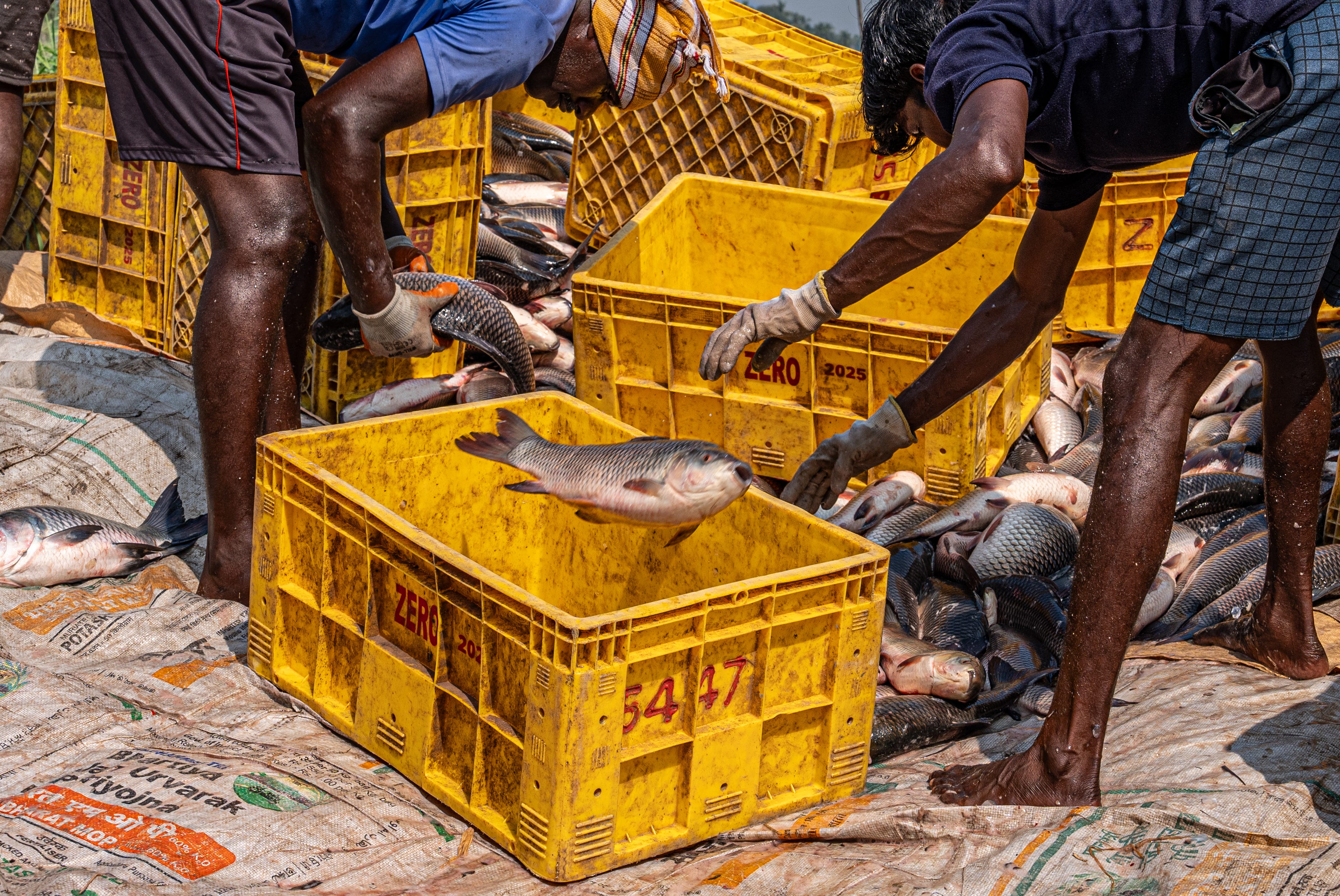
There was a whole mechanics to the harvesting process. First, a makeshift enclosure was made around a tarp on the ground, bordering it with rows of bright yellow and orange plastic crates. Once the fish were pulled in and the net was tightened and secured, a few workers went into the water and stood waist deep as the fish tried their best to swim and stay afloat within that compressing space between the water and the shore. Some stood with smaller net baskets just on the edge. As the ‘harvest’ started, the workers in the water dipped the smaller basket into the water, filling it with live, struggling fish. The basket was then passed to the workers standing on the shore. They walked a few paces and dumped the fish inside the temporary enclosure, where a few workers started sorting them out. Piles and piles of fish lifted and thrown, lifted and thrown- it was a conveyor belt of people, crates and fish trying to breathe outside of water and failing to do so. A repetitive movement that went on for hours. As the fish pile became larger inside the enclosure, I watched their scales becoming drier and drier as the sun beat down upon us. Their mouths gaping wide and shutting as they struggled, their eyes rolling back- a last ditch effort to find water as the body jostled and curved and the fish jumped in the air with one violent push- giving it all, but landing on top of another of its own kind going through the same pain and suffering.
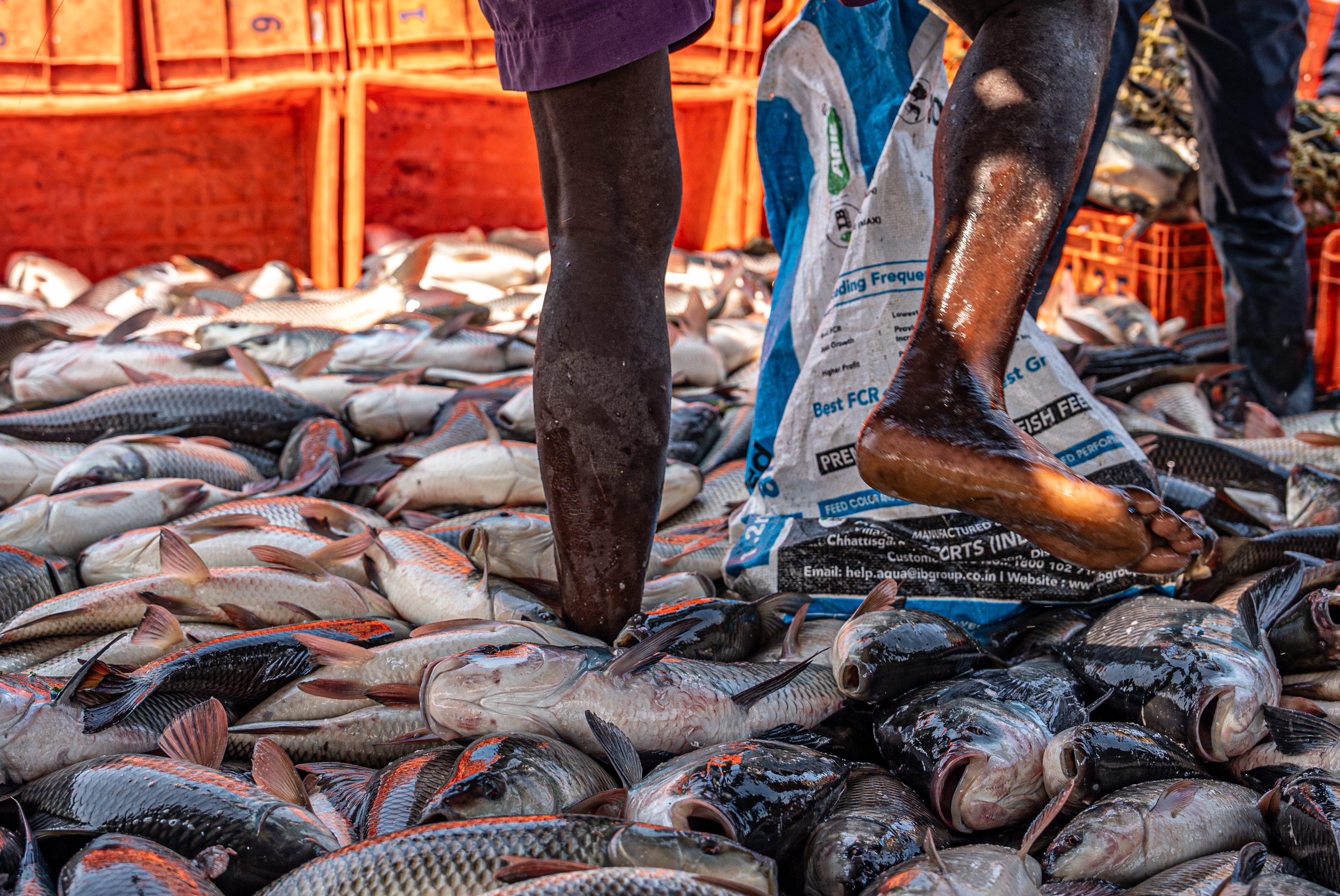
Workers walked over these piles of live beings, oblivious to the struggle under their feet. Some even picked heavy fish and posed for the camera, smiling, without even looking at the fish they held high which had a panic stricken gaze as it realized its been pulled out of the water.
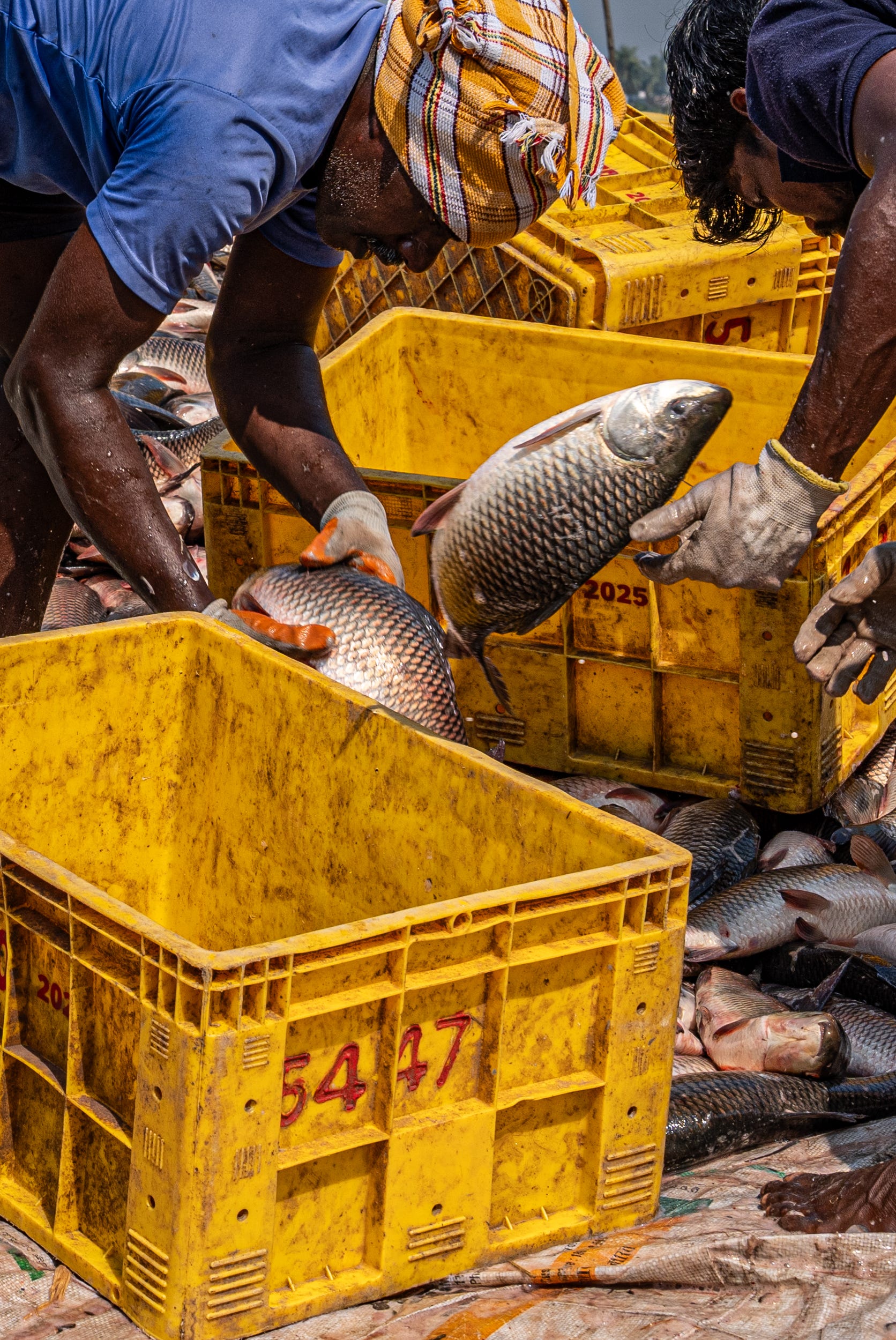
From the enclosure, the fish were put into plastic crates- one fish at a time.
Crates were filled and weighed and lifted into waiting trucks.
Each crate was filled to the brim with crushed ice and then placed inside the truck in neatly stacked rows.
The fish were still alive.
The Will to Live
On my next assignment, I carried my drone. The bird’s eye view gave a different perspective and the realisation of the scale of this industry was disturbing in its own way. Square and rectangle shapes of aquafarms stretched till the horizon, as far as the eye could see. Speaking to locals and doing my own research, I learnt that all this was once mangroves, deltas, fertile farmlands, wetlands, depending on the location.
Over the years, the demand for fish has converted productive land into a literal wasteland. The soil has lost its nutrients, making it infertile and incapable of ever producing any crop. The groundwater has been affected. The riverine systems along these lands have been altered. Ecosystems have vanished. And yet, the government provides subsidies and promotes aquafarming even in places like Punjab and Haryana.
For the farm owners, this is nothing but profit.
For the workers, doing daily wage labour in an aquafarm is a source of income. For them, the fish are no different from sacks of potatoes being collected from a potato farm or in a wholesale vegetable mandi. Its just a job for them- a long hardworking day at the end of which they will get a few currency notes to feed their families. I don’t think they are cruel because they do not show any emotions- I feel its a kind of disengagement that has to be developed to keep your sanity.
During another assignment, I decided to get inside the enclosure and make some images from the perspective of the fish that were being collected within the crates. As basket after basket were emptied inside, I focussed on the sound- above the din of the workers yelling and people talking, as the fish pile started to become bigger and bigger, all of them struggling to move, to breathe, their bodies shoving and pushing against each other, it sounded like raindrops on a tin roof. Maybe a macabre thought, but I was surprised at the correlation my mind made between the sound of death around me and the sound of falling water that generates life.
As a photographer documenting uncomfortable truths that we do not want to see or acknowledge, my most poignant understanding and experience has not been the suffering that I have witnessed. It is the will to live, the inherent survival instinct that the fish (and all other beings) held on to, till the last moment they had any iota of life left in them- even when they gasped painfully, even when their eyes rolled back into their sockets, even when they made a futile attempt to jump one last time, maybe with the hope that they will land in water.
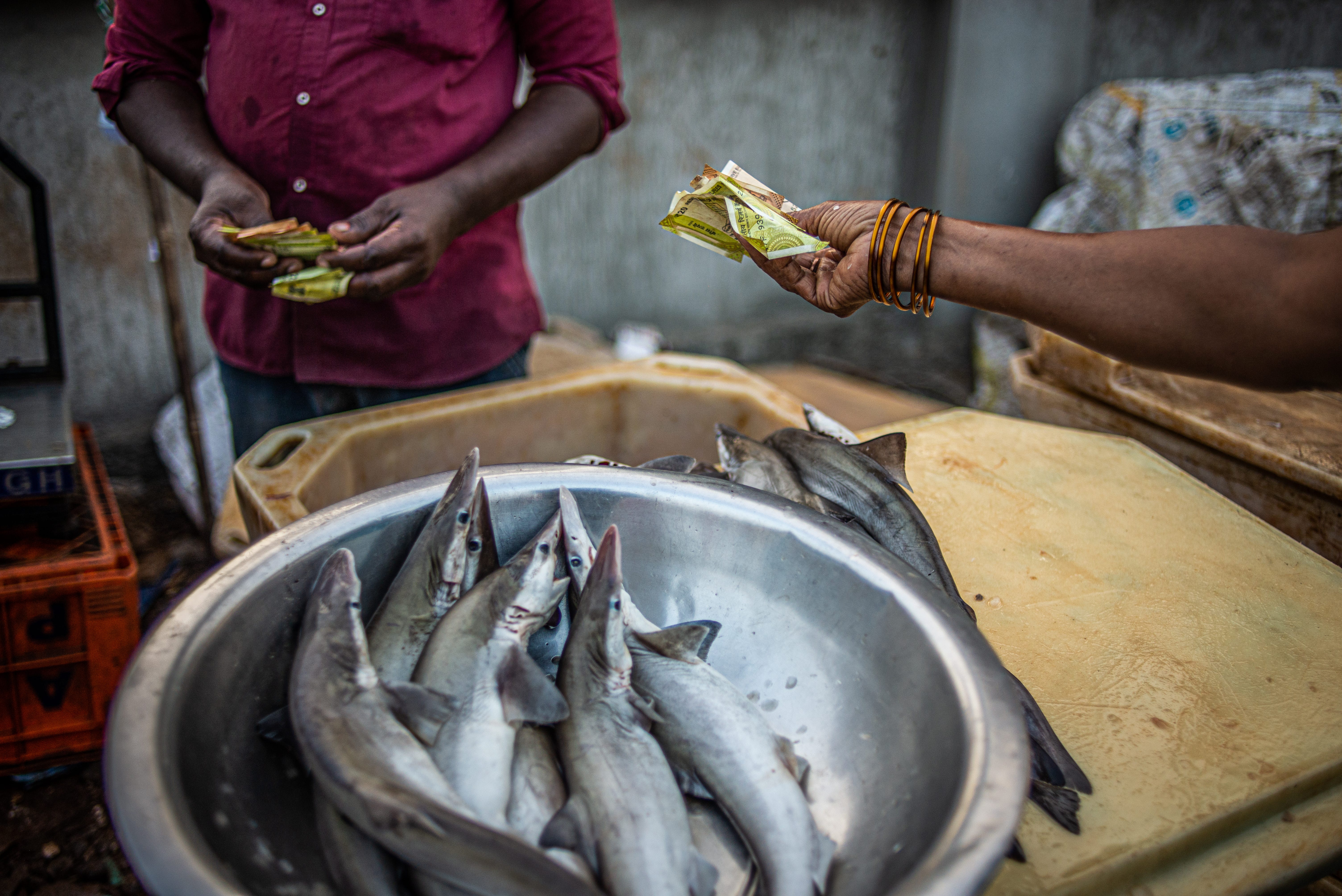
Weight
The saddest aspect of my work to come to terms with, for me, is the fact that when I have pointed my camera at a fish, a sentient, living being, which has been stripped away from its identity as something alive, when I have made that image, that is the only moment in its entire existence when it has been actually ‘seen’- for the first and the last time.
Afterall, fish are not counted as individuals. They are measured in weight.
Shatabdi Chakrabarti is an award-winning Indian filmmaker and animal photojournalist whose work examines how human lives intersect with those of other animals. Beginning her career at NDTV, she went on to document wildlife and the experiences of communities living alongside it. As a contributing animal photojournalist with We Animals, she documents animals caught in food production, bringing sustained attention to lives rarely seen beyond their commercial value. Her work has appeared in Mongabay and been exhibited at the India Art Fair. She won the Conservation Issues category at the Nature inFocus Photography Awards in 2018 and the Wildlife Photographer of the Year and Conservation category winner at Singapore Earth in Focus Wildlife Film Festival 2025.
Praani is our note on listening better to the voices of nature and more than human life, ways of amplifying them, and finding pathways to bring them into our ways of governance. At Agami, we are deeply interested in how rivers, forests, animals, and even the winds and the stones might speak into our deliberations on justice.